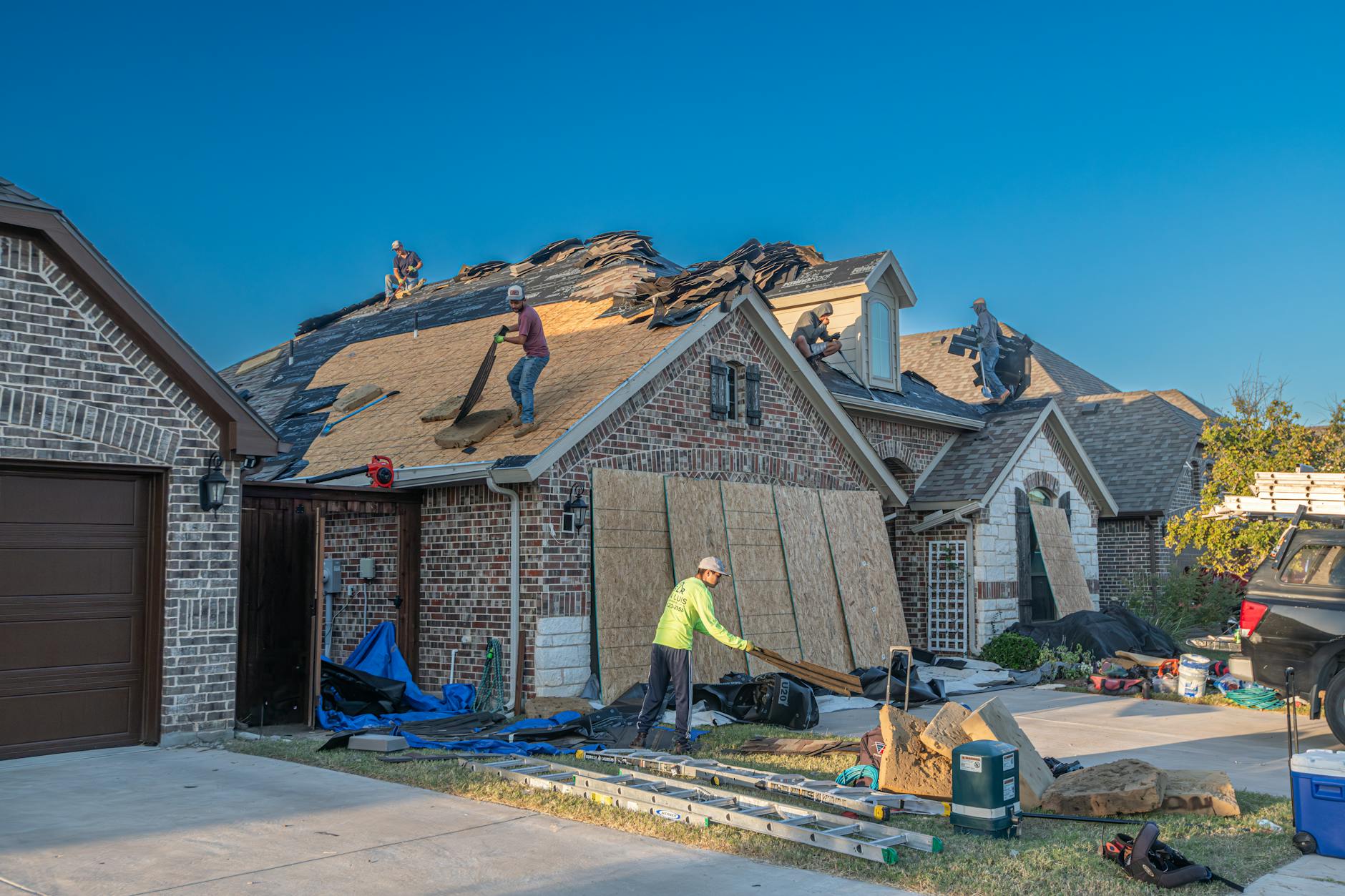
Does Homeowners Insurance Cover Roof Replacement?
Sometimes. Homeowners insurance covers roof replacement when a sudden covered event like hail or wind destroys it, minus your deductible. It does not cover a roof that simply wore out with age. The catch most homeowners miss is that your roof's age changes everything: an older roof may only be covered for its depreciated value, and some insurers restrict or refuse coverage on roofs past a certain age. This guide explains when replacement is covered and how age affects your payout.
The question sounds like it should have a yes or no answer. It does not. The same roof can be fully covered or barely covered depending on what caused the damage and how old the roof is. Getting this wrong leads to an ugly surprise when the check arrives smaller than the repair bill.
In Arizona, where UV load ages roofs faster than the national average, roof age is not a minor footnote. It is often the single factor that decides whether insurance pays to replace your roof or hands you a fraction of the cost.
Does homeowners insurance cover roof replacement?
Yes for sudden, accidental damage from a covered peril, and no for age and wear. A hail or wind event that destroys the roof is covered, minus your deductible. A roof that failed because it reached the end of its service life is a maintenance expense you pay for.
That distinction is the whole game. The Insurance Information Institute overview of what a homeowners policy covers draws the line between sudden damage and gradual deterioration. Arizona's most common covered events are monsoon wind and hail. If your roof is bald from years of sun, that is wear, and it is excluded. For the Arizona-specific breakdown, see what homeowners insurance covers for roofs in Arizona.
How does roof age change your coverage?
Age is the hidden variable. As a roof gets older, insurers increasingly cover it for actual cash value rather than replacement cost, and some will not write or renew a policy on a roof past 15 or 20 years without an inspection or replacement. An old roof is a coverage liability, not just a repair risk.
Insurers price roof risk heavily. The Insurance Information Institute explains how your roof influences your home insurance, and its 2024 roof insurance toolkit details how age and condition drive both coverage and premium. In Arizona's climate, a shingle roof can reach the age where insurers balk after just 15 to 20 years, well short of its warranty. Knowing how long a roof lasts in Arizona helps you anticipate when coverage tightens.
Replacement cost vs actual cash value
This is where payouts shrink. A replacement cost policy pays what a new roof costs today. An actual cash value policy pays that amount minus depreciation for the age and wear of the old roof. On a 17-year-old roof, depreciation can cut the payout dramatically.
Know which one you have before you need it. The NAIC guide to replacement cost versus actual cash value and the Texas Department of Insurance explanation of the two policy types both spell out the math. A covered claim on an old roof under an actual cash value policy might pay half of what replacement costs, leaving you to cover the rest even after a legitimate storm.
When do you get a full replacement instead of a repair?
Insurers pay to replace the whole roof when the damage cannot be repaired to match, or when repairs would compromise the roof. For scattered damage, they often pay to repair or replace only the affected slopes. Full replacement is not automatic just because part of the roof is damaged.
The threshold varies by policy and adjuster. The Texas Department of Insurance guidance on replacing your roof with insurance walks through when a claim leads to full replacement versus partial repair. If the adjuster approves only a partial repair but matching materials no longer exist, that is often grounds to argue for full replacement. Our guide on how to negotiate a roof insurance claim covers how to make that case.
What will insurance never cover?
Insurance will not pay for wear, age, neglect, poor maintenance, or damage from a roof you failed to keep up. It also excludes cosmetic-only damage on some policies and pre-existing problems. Deferred maintenance that leads to a leak is your cost, not the insurer's.
Regulators are consistent on this. The North Carolina Department of Insurance homeowners insurance FAQ and Arizona's own DIFI consumer guidance on homeowners insurance both note that maintenance is the homeowner's responsibility. Arizona regulators have also studied how climate risk is reshaping coverage in the state, documented in a DIFI report from the Arizona Resiliency and Mitigation Council on homeowners insurance. The takeaway: a maintained roof stays insurable, a neglected one does not.
How to protect your coverage and payout
Keep your roof maintained, document its condition, and understand your policy before a storm hits. A well-kept roof stays insurable, qualifies for better coverage terms, and gives you a stronger claim when real damage occurs. The worst time to learn you have an actual cash value policy is after the hail.
Check your declarations page for replacement cost versus actual cash value, and ask your agent what age limit your insurer applies to roofs. If your roof is nearing the end of its life, budget for replacement before an insurer forces the issue at renewal. To estimate that cost, use our free roof cost estimator, and when damage does occur, follow the steps in how to file a roof insurance claim.
Frequently Asked Questions
Will insurance cover a 20-year-old roof? It depends on the insurer and the cause of damage. Many insurers cover older roofs only at actual cash value, and some will not renew a policy on a roof past 15 to 20 years without an inspection or replacement. Storm damage may still be covered, but the payout is often depreciated.
What is the difference between ACV and replacement cost for a roof? Replacement cost pays what a new roof costs today. Actual cash value pays that amount minus depreciation for the roof's age and wear. On an older roof, an actual cash value settlement can be a fraction of the replacement price.
Can my insurer drop me because of my roof's age? An insurer can decline to renew or require replacement if the roof is old or in poor condition. This is increasingly common in high-climate-risk states. Replacing an aging roof proactively usually keeps you insurable and can lower your premium.
Does a new roof lower my insurance premium? Often yes. A new roof reduces the insurer's risk, and impact-resistant or reflective materials may qualify for additional discounts with some carriers. Ask your agent whether your insurer offers a credit for a new or upgraded roof.
Will insurance pay to replace my whole roof if only part is damaged? Not always. Insurers frequently pay to repair or replace only the damaged slopes. Full replacement is more likely when the damage is widespread or when matching materials are no longer available, which can make a partial repair impractical.
Is roof maintenance really my responsibility? Yes. Insurance covers sudden accidental damage, not upkeep. Neglect that leads to a leak or failure is excluded, and poor maintenance can even jeopardize an otherwise valid claim. Routine inspections protect both the roof and your coverage.
Know your number before you call a roofer.
Free Roof Cost Estimate