Metal Roofing in Arizona: What Homeowners Should Know
TLDR: Metal roofing is a strong long-term choice for Arizona homes because it handles extreme heat, UV exposure, and monsoon weather better than asphalt shingles and without the cracking risk that affects aged tile. Standing seam and stone-coated steel are the most common residential metal options in the Phoenix metro. Upfront cost runs $10 to $18 per square foot installed, but a metal roof typically lasts 40 to 70 years, which changes the cost-per-year math significantly.
Metal has been the default roofing material for commercial buildings in Arizona for decades. It is now one of the fastest-growing options in the residential market across Scottsdale, Gilbert, Chandler, and the broader Phoenix area. Homeowners are making the switch for different reasons: some want lower energy bills, some want a roof that outlasts the mortgage, and some have cycled through two or three asphalt shingle jobs and want to stop.
If you are replacing a roof with a lifespan goal beyond 25 years, metal deserves a detailed look alongside tile and foam.
Is metal roofing a good choice for Arizona?
Metal roofing handles Arizona's climate challenges well across multiple dimensions:
- Reflects solar radiation better than dark asphalt shingles, reducing roof surface temperature
- Does not crack, curl, granulate, or lose UV resistance the way asphalt does after 15 to 20 Arizona summers
- Properly installed standing seam systems accommodate thermal expansion without fastener fatigue
- Does not provide the organic material and moisture that support algae or moss growth
- Modern paint systems resist UV fading and chalking for 30 to 40 years
The Metal Roofing Alliance reports that metal roofing with reflective coatings can reduce home cooling costs by 10 to 25 percent compared to conventional dark-colored asphalt shingles. In Arizona, where residential cooling accounts for the largest share of annual energy bills, that is a meaningful long-term savings over the life of the roof.
What types of metal roofing work best in Arizona?
Three types are commonly installed on Arizona residential properties:
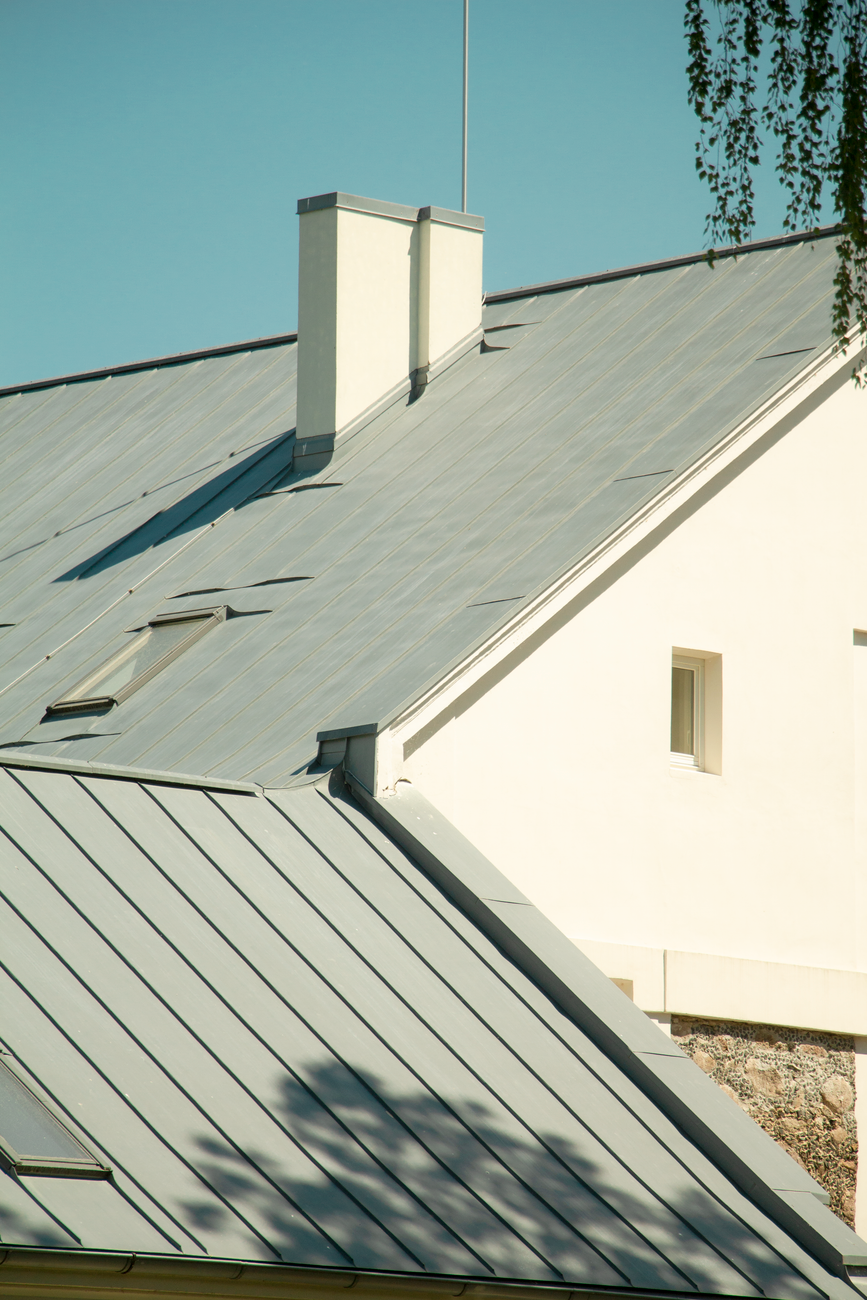
Standing seam: Panels run vertically from ridge to eave and lock together at raised seams. Fasteners are concealed inside the seam, never exposed to weather. A clip-based floating attachment allows panels to expand and contract with temperature changes without stressing the metal. This is the premium long-term residential metal product.
Stone-coated steel: Steel panels coated with acrylic-bonded stone chips designed to resemble tile or shingles. Popular in Arizona HOA neighborhoods that require a traditional aesthetic. Provides metal's structural performance while matching the look familiar in Phoenix-area communities.
Exposed fastener (corrugated or R-panel): Lower cost and faster to install, but fasteners penetrate the panel face and are exposed to weather. In Arizona's extreme temperature range, fastener seals can compress and fail over time. Better suited for agricultural or commercial applications than long-term residential use.
For Arizona's climate, standing seam is the most durable residential choice. The floating attachment system prevents the fatigue cracking at fastener penetrations that can develop over years of thermal cycling between summer highs above 110 degrees Fahrenheit and cool winter nights.
How long does a metal roof last in Arizona?
A properly installed metal roof lasts 40 to 70 years. Many standing seam panel systems carry 40-year or lifetime limited warranties on the panel itself. The NRCA Metal Roofing Manual provides technical installation standards covering thermal expansion accommodation, sealant selection, and substrate compatibility.
The limiting factor in Arizona is typically the paint system, not the metal substrate. High-performance PVDF coatings, sold under names like Kynar 500 or Hylar 5000, resist UV fading and chalking significantly longer than standard polyester coatings. Ask your contractor which coating grade the panels carry and confirm what the warranty covers on finish appearance, not just structural integrity.
For a full comparison of how metal lifespan stacks up against tile and shingles under Arizona's UV and heat conditions, see how long a roof lasts in Arizona.
How much does metal roofing cost in Arizona?
Metal roofing costs more upfront than asphalt shingles. Current installed cost ranges in the Phoenix metro:
- Exposed fastener (corrugated or R-panel): $7 to $11 per square foot
- Stone-coated steel: $9 to $14 per square foot
- Standing seam: $12 to $18 per square foot
A 2,000-square-foot home might run $24,000 to $36,000 for standing seam, compared to $12,000 to $18,000 for concrete tile or $8,000 to $12,000 for architectural shingles. The higher upfront cost is a real constraint, particularly for homeowners without significant equity or who plan to sell within 10 years.
Divided across a 50-year lifespan, metal's annualized cost can be competitive or lower than materials that need replacement every 15 to 25 years. See roof replacement cost in Arizona for 2026 for current material and labor cost ranges across all types.
Does metal roofing handle Arizona heat?
Yes, when specified with the right coating. Solar reflectance is the key performance metric. ENERGY STAR certifies metal roofing products that meet minimum solar reflectance and thermal emittance thresholds. Certified products reflect a larger share of incoming solar energy rather than absorbing it.
The U.S. Department of Energy notes that cool roofs can reduce rooftop temperatures by up to 50 degrees Fahrenheit compared to conventional dark roofing. In Arizona, where summer roof surface temperatures routinely reach 155 to 165 degrees Fahrenheit, even a 30-degree reduction cuts radiant heat load into the attic and reduces air conditioning cycling.
Metal also releases absorbed heat quickly after sunset. Concrete tile retains heat well into evening hours. A metal roof cools rapidly once direct sun exposure ends, which provides a marginal advantage for nighttime comfort in homes with limited attic insulation.
Does metal roofing hold up to Arizona monsoons and hail?
Metal performs well in both high-wind and hail conditions. The Insurance Institute for Business and Home Safety evaluates roofing materials for wind uplift resistance and impact performance. Metal panels rated to Class 4 impact resistance under UL 2218, the highest available rating, withstand 2-inch steel ball impacts dropped from 20 feet without fracturing the panel.
NOAA's Storm Events Database documents significant hail events across Arizona counties each year. Maricopa County records multiple events annually where hail reaches 1 to 1.5 inches in diameter. Class 4 panels are engineered for these conditions.
Many Arizona insurance carriers offer premium discounts for Class 4 rated roofing because it reduces claim frequency. Contact your insurer before installation to confirm whether the specific product qualifies and what documentation is required. For more context on what monsoon and hail events do to different materials, see hail damage on Arizona roofs.
What are the drawbacks of metal roofing in Arizona?
Metal roofing has real trade-offs:
- Higher upfront cost than shingles and, for standing seam, higher than most tile options
- Softer gauge panels can show dents from large hail even when structural integrity is maintained
- Standing seam systems can produce occasional popping or clicking sounds during extreme temperature swings
- Not all contractors have standing seam installation experience; poor seam crimping and inadequate expansion gaps cause early failures
- Some HOAs restrict metal roofing or require a lengthy variance process before approval
The noise concern is frequently overstated. A standing seam system installed on a solid decked substrate with a quality underlayment is not noticeably louder than other residential roofing materials during rain. The common association of loud metal roofs comes from older exposed-fastener corrugated systems installed over open purlins, which are a different product and application.
Before hiring, verify any metal roofing contractor through the Arizona Registrar of Contractors. Metal panel work requires different skills than tile or shingle installation, and experience matters for long-term performance. See what a roofing contractor license in Arizona covers for what to verify before you sign.
Does metal roofing qualify for energy credits in Arizona?
Some products may qualify. The federal Energy Efficient Home Improvement Credit covers certain roofing upgrades under specific conditions tied to ENERGY STAR certification. Arizona utility companies and the Arizona Department of Environmental Quality also offer rebate programs for qualifying energy efficiency improvements.
Consult a tax professional to confirm whether your specific product and installation qualifies before making the purchase decision based on expected credits. The qualifying criteria depend on the certified solar reflectance value of the installed product, and requirements can change year to year.
Frequently Asked Questions
Does metal roofing look out of place in Arizona neighborhoods? Not for the most common products. Stone-coated steel closely resembles clay or concrete tile, which is familiar across Phoenix-area neighborhoods. Standing seam has a distinct modern appearance that has become increasingly common in new construction and remodels in Scottsdale, Tempe, and Gilbert.
Is metal roofing loud in Arizona rain? A properly installed metal roof on a solid sheathed deck with underlayment is not meaningfully louder than other roofing materials during rain. The noise association comes from older corrugated metal systems over open framing, not from modern residential standing seam or stone-coated steel.
Can metal roofing be installed over existing shingles in Arizona? Sometimes. Arizona building codes permit roof-over applications under specific conditions when the deck is structurally sound and local jurisdiction requirements are met. A licensed contractor can assess whether your substrate qualifies and confirm whether a permit is required for your city.
Will metal roofing rust in Arizona? Quality metal roofing panels use Galvalume or galvanized substrates that resist corrosion under normal Arizona conditions. Cut edges at penetrations and trim details need proper sealant to prevent early edge corrosion, which is a standard part of any competent installation.
Do Arizona HOAs have to allow metal roofing? Under Arizona statute A.R.S. 33-1261 and related provisions, HOAs have limitations on restricting energy-efficient building materials. Aesthetic requirements still apply and can require a variance submission. Review your HOA's CC&Rs before ordering materials and prepare manufacturer documentation on product appearance if a variance request is needed.
Know your number before you call a roofer.
Free Roof Cost Estimate