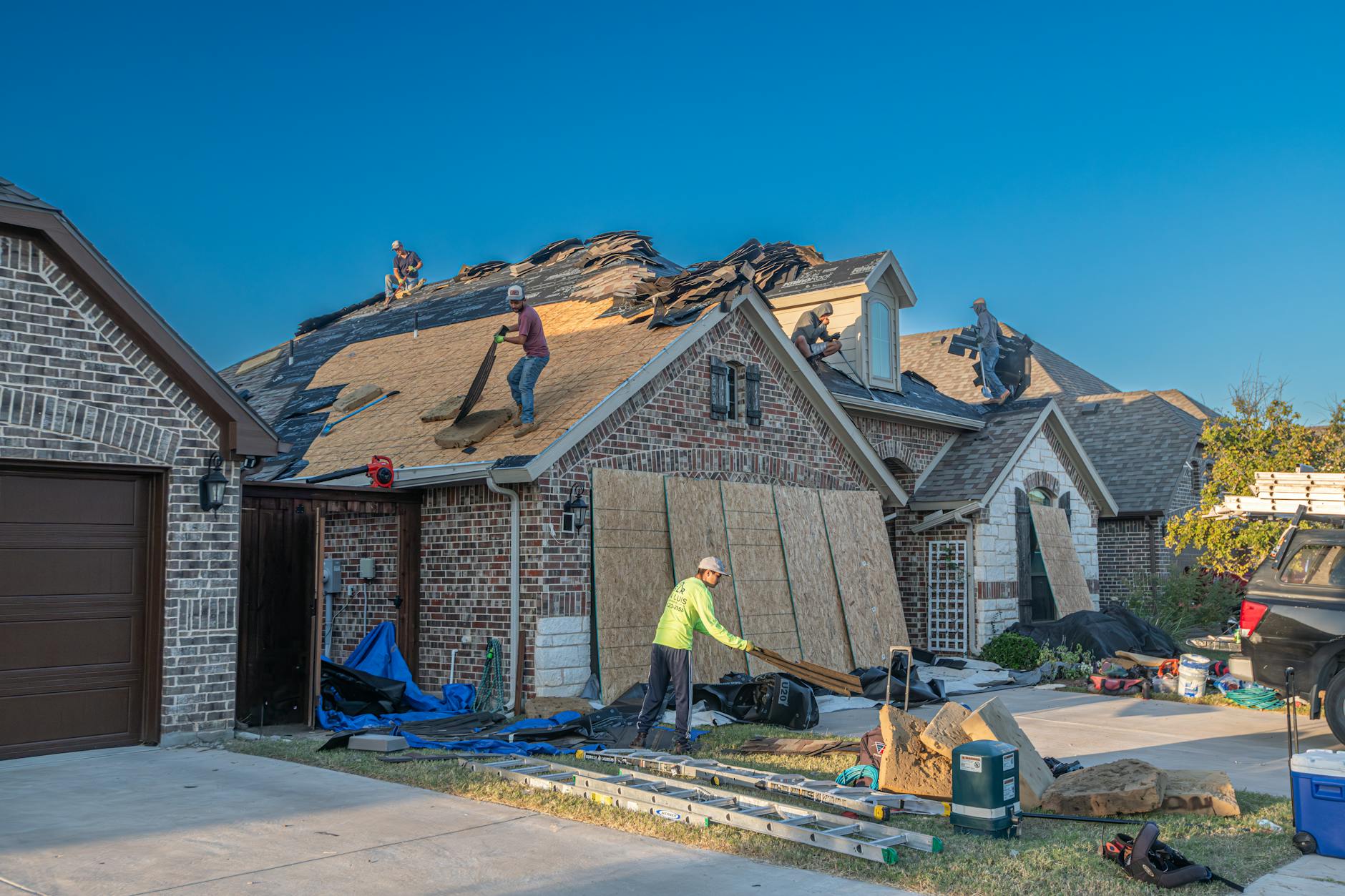
Roof Decking Replacement Cost in Arizona
Roof decking replacement cost in Arizona typically runs between $3 and $7 per square foot for materials and labor, meaning a full 1,500-square-foot deck can cost $4,500 to $10,500 or more. Not every reroof requires new decking, many Arizona homes with tile or foam roofs have structurally sound OSB or plywood underneath that needs no replacement at all. The biggest cost drivers are board thickness, the extent of rot or delamination, and whether monsoon moisture damage has spread beyond a few isolated sheets. This guide breaks down every cost factor so you can walk into contractor conversations with realistic numbers.
What Is Roof Decking and Why Does It Matter in Arizona?
What exactly is roof decking, and why does Arizona's climate make it a special concern?
Roof decking, also called sheathing, is the structural panel layer nailed across your rafters. Every roofing material (shingles, tile, TPO, foam) fastens to or rests on it. In Arizona, extreme UV exposure above a UV index of 11+ combined with monsoon humidity swings from June 15 through September 30 create a cycle of expansion, contraction, and occasional moisture intrusion that accelerates decking deterioration more than in moderate climates.
Most Arizona valley homes were built using either 7/16-inch or 1/2-inch OSB (oriented strand board) or 1/2-inch CDX plywood. OSB is more vulnerable to moisture swelling and delamination when roof penetrations or flashing failures allow water in during monsoon events. Plywood tends to hold fasteners better after rewetting but costs slightly more upfront. Either way, the decking is the foundation of your entire roofing system, a compromised deck means fasteners pull out prematurely and your new roof underperforms its rated lifespan.
How Much Does Roof Decking Replacement Cost in Arizona?
What are the realistic price ranges Arizona homeowners should budget for decking replacement?
Expect to pay roughly $3 to $7 per square foot installed, depending on board type, rafter spacing, and roof complexity. A partial replacement of 5 to 10 sheets averages $500 to $1,500. A full deck replacement on a 2,000-square-foot home can reach $6,000 to $14,000 when combined with tearoff and underlayment.
Material Costs Alone
| Material | Thickness | Approx. Cost Per Sheet (4x8) | |---|---|---| | OSB | 7/16 in. | $18 to $28 | | OSB | 1/2 in. | $22 to $34 | | CDX Plywood | 1/2 in. | $30 to $45 | | CDX Plywood | 5/8 in. | $38 to $55 |
Sheet prices fluctuate with lumber markets. The Producer Price Index for wood products is a useful benchmark when getting quotes across multiple months.
Labor Costs in the Phoenix Metro East Valley
Labor in the Gilbert, Mesa, Chandler, and Queen Creek markets runs $1.50 to $3.50 per square foot for decking installation alone, separate from the roofing crew's main bid. Contractors typically roll this into the overall reroof quote, so ask for the decking line item to be broken out. Steep-slope roofs (above 6:12 pitch) add 15 to 25 percent to labor costs due to safety rigging requirements.
Full Reroof vs. Partial Deck Replacement
If only monsoon-damaged sections need replacement, a skilled crew can remove tile, swap out 3 to 8 sheets, and reset the tile the same day, keeping costs far lower than a full project. The NRCA (National Roofing Contractors Association) recommends probing the deck during any reroof for soft spots before committing to a replacement scope.
What Factors Drive Costs Higher in Arizona?
Which specific conditions make deck replacement more expensive here than the national average?
Several Arizona-specific factors push costs above national medians reported in Remodeling Magazine's annual Cost vs. Value report. The primary ones are roof complexity, existing damage extent, and code requirements.
Monsoon Moisture Damage
The National Weather Service Phoenix forecast office documents that Phoenix metro receives the majority of its annual rainfall between June 15 and September 30. When flashing or pipe boots fail heading into monsoon season, a single storm can saturate multiple sheets of OSB within hours. Delaminated OSB cannot be dried and reused, it must be cut out and replaced.
Summer Heat and Scheduling
July and August attic temperatures in the East Valley routinely exceed 150°F. This limits crew working hours to early morning, reducing daily output and extending project timelines. Some contractors charge a summer surcharge of 5 to 10 percent for projects scheduled at peak heat.
Tile Roof Removal and Reset
Concrete or clay tile roofs, which typically last 30 to 50 years in Arizona's dry climate, must be carefully removed and stored before any decking work. Tile removal and reset adds $2 to $4 per square foot to the project. Broken tiles during removal are replaced at $3 to $8 each for standard profiles.
Code Compliance Upgrades
Maricopa County adopted the 2018 International Residential Code, which specifies minimum decking thickness and fastener schedules. If your original home used 3/8-inch OSB (common in 1980s East Valley tract homes), replacement must step up to at least 7/16 inch, sometimes requiring rafter blocking additions that add $200 to $800 to the project.
When Do You NOT Need to Replace Your Roof Decking?
Are there situations where Arizona homeowners can skip decking replacement entirely?
Yes, and this is important. Many reroofing bids include blanket decking replacement that is not always warranted. If your existing sheathing passes a physical inspection, replacement is unnecessary and adds thousands of dollars of cost with no functional benefit.
Your decking is likely fine if:
- No visible soft spots or spongy areas exist when walked on or probed with a screwdriver
- OSB panels show no delamination (layers separating or bubbling)
- Fasteners are still holding tight with no pull-through
- There is no visible dark staining or mold growth on the underside (visible from attic)
- The deck lies flat with no waves or humps indicating moisture swelling
A foam (SPF) roof system, common in Arizona flat and low-slope applications, may actually preserve the underlying deck for decades by eliminating exposed penetrations. Many East Valley homeowners converting from gravel-and-felt to spray foam find their plywood deck in excellent condition after 20+ years.
Be skeptical of any contractor who insists on full decking replacement without showing you physical evidence of damage. Ask them to walk you onto the roof and demonstrate the problem areas.
How Is Roof Decking Damage Diagnosed?
How do contractors and inspectors actually determine whether decking needs replacement?
A proper decking assessment combines visual inspection, physical probing, and attic inspection. No single test alone is definitive.
The Screwdriver Test
A contractor inserts a flat-blade screwdriver into the surface of each panel with moderate hand pressure. Sound OSB or plywood resists penetration. Rotted or delaminated panels allow the blade to sink in easily. This test should be performed at panel edges, around penetrations, and in valleys where water concentrates during monsoon events.
Attic Inspection
From inside the attic, look for daylight gaps at panel seams, dark staining on the underside of panels, and sagging between rafters. The EPA's guidance on moisture and mold in buildings notes that OSB exposed to chronic moisture cycling develops visible discoloration before structural failure, giving homeowners an early warning window.
When to Get a Third Opinion
If a contractor identifies more than 30 percent of your deck as damaged, consider hiring a licensed roofing inspector or structural engineer for a second opinion before approving a full replacement. Costs for an independent inspection run $200 to $400 in the Phoenix metro and can save thousands if the damage assessment is overstated.
What Decking Material Should Arizona Homeowners Choose?
Is there a best decking material for Arizona's UV intensity and monsoon climate?
For most Arizona applications, 1/2-inch CDX plywood is the recommended choice over OSB when doing a full replacement. Plywood's cross-grain construction resists moisture cycling better, holds fasteners more reliably after thermal expansion events, and degrades more slowly if a future leak occurs.
OSB remains acceptable for budget-conscious projects and is widely used without issues when properly installed with H-clips at unsupported edges and all penetrations sealed. GAF's roofing system specifications (one of the most common shingle brands used in Arizona) approve both OSB and plywood as acceptable substrates when installed per IRC requirements.
For tile roofs specifically, 5/8-inch CDX plywood is the preferred substrate because tile systems are heavier (9 to 12 pounds per square foot for concrete tile) and require superior fastener holding strength across a 30 to 50-year service life.
How Can Homeowners Reduce Roof Decking Replacement Costs?
What practical steps can Arizona homeowners take to minimize their decking replacement bill?
Several strategies genuinely reduce costs without cutting corners on quality.
Act before monsoon season. Scheduling decking repairs in April or May avoids summer surcharges and keeps the project from getting caught in an active storm pattern. Contractors also have more availability and better pricing in spring.
Get three itemized bids. Require each contractor to list the number of sheets being replaced, the material specification, and the labor rate separately. This lets you compare apples to apples rather than bundled totals.
Address leaks immediately. A single failed pipe boot or cracked tile can saturate 3 to 5 sheets of OSB in one monsoon season. Learn to identify roof leak warning signs early and patch penetrations annually. Emergency repairs cost $150 to $400, far less than decking replacement.
Preserve tile carefully. If your tile is being reset after decking work, document any pre-existing cracked or chipped tiles before work begins. This prevents disputes over damage causation and keeps the contractor accountable for breakage during the project.
Check your homeowner's insurance policy. Some policies cover decking replacement when damage is tied to a covered peril (hail, wind-driven monsoon rain). See /blog/roof-insurance-claim-arizona/ for a full breakdown of what Arizona policies typically cover.
What Does the Full Project Timeline Look Like?
How long does roof decking replacement actually take from inspection to completion?
A partial decking replacement combined with a tile reset typically completes in one to three days for an average East Valley home. A full deck replacement paired with a complete reroof runs three to seven days depending on crew size and roof complexity.
Key milestones:
- Inspection and scope agreement (1 to 3 days before work)
- Permit pull if required by jurisdiction (Gilbert, Chandler, Mesa all require permits for structural sheathing replacement, allow 3 to 10 business days)
- Existing roofing material removal (day 1)
- Damaged sheet removal and new sheet installation (day 1 to 2)
- Underlayment installation (day 2)
- New or reset roofing material installation (day 2 to 4)
- Inspection by municipality if permit was pulled (scheduled after completion)
Always verify your contractor has pulled the required permit before work starts. You can verify permit status through Maricopa County's permit portal or your specific city's building department.
How Does Decking Replacement Fit Into a Full Reroof Budget?
Where does decking replacement fall in the overall cost of a new roof in Arizona?
Decking replacement typically represents 15 to 30 percent of a total reroof budget. The rest breaks down roughly as follows for a standard 2,000-square-foot East Valley home:
| Cost Component | Estimated Range | |---|---| | Tearoff and disposal | $1,200 to $2,500 | | Decking replacement (partial to full) | $1,500 to $8,000 | | Underlayment | $800 to $2,000 | | New roofing material (shingles or tile) | $4,000 to $18,000 | | Flashing, boots, and trim | $400 to $1,200 | | Permits and inspections | $150 to $600 | | Total | $8,050 to $32,300 |
Arizona shingle roofs carry a lifespan of 15 to 20 years in the Valley's heat versus the 25 to 30 years rated in moderate climates, a factor worth weighing when deciding how much to invest in premium decking materials on a home you plan to sell in under a decade.
Frequently Asked Questions
Can I replace just a few sheets of roof decking without a full reroof?
Yes. If your roofing contractor identifies isolated damage around a leak area and the rest of the deck is sound, partial replacement is completely valid. A crew can remove tile or shingles in the affected zone, swap the bad sheets, reinstall underlayment, and reset or replace the surface material in a single day. You do not need a full reroof to address localized decking damage.
Does homeowner's insurance cover roof decking replacement in Arizona?
It depends on the cause. Damage from a covered peril, such as wind-driven rain during a monsoon or hail impact, is typically eligible for a claim. Damage from long-term neglect or gradual deterioration is generally excluded. Document damage with dated photos immediately after any storm event and contact your insurer before authorizing repairs.
Is OSB or plywood better for Arizona roof decking?
For most Arizona applications, 1/2-inch or 5/8-inch CDX plywood outperforms OSB over the long term because it handles repeated moisture cycling better and holds fasteners more reliably. OSB is acceptable and widely used, but it is more vulnerable to swelling and delamination if a leak occurs during its service life.
How do I know if my contractor is replacing more decking than I actually need?
Ask the contractor to physically show you each sheet they plan to replace and demonstrate the damage with a probing test while you watch. Any sheet they mark for replacement should fail the screwdriver probe or show visible delamination, staining, or fastener pull-through. If they cannot show you physical evidence, push back or get a second opinion.
Do I need a permit to replace roof decking in Gilbert or Chandler, Arizona?
Yes in most cases. Structural sheathing replacement is considered structural work under the 2018 IRC as adopted in Maricopa County jurisdictions. Gilbert, Chandler, Mesa, and Queen Creek all require permits for this scope of work. Your contractor should handle the permit pull, if they suggest skipping it, that is a red flag.
How does monsoon season affect roof decking repair timing?
Monsoon season runs June 15 through September 30 in Arizona. Scheduling decking repairs before June avoids two problems: summer labor surcharges and the risk of an active weather event interrupting an open roof. If you discover damage mid-monsoon, contractors will typically perform emergency temporary waterproofing and schedule full repairs for the first available dry window.
*Related reading on RoofInstall.net:*
- Roof Replacement Cost in Tucson, AZ: 2026 Pricing Guide
- Roof Replacement Cost in Sun City AZ: 2026 Homeowner Pricing Guide
Know your number before you call a roofer.
Free Roof Cost Estimate