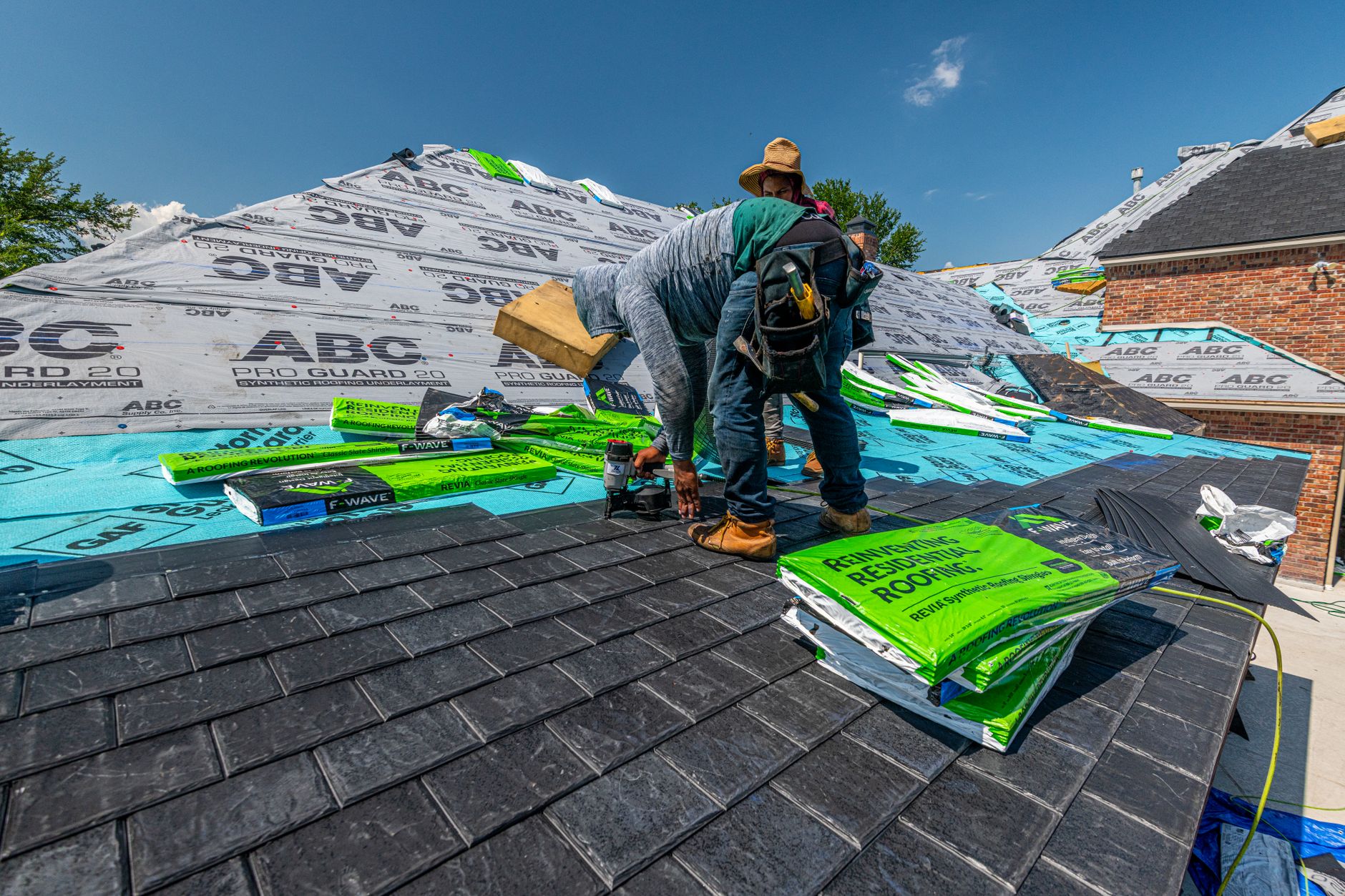
Roof Underlayment Reddit: What Homeowners Actually Get Right (and Wrong)
Searching "roof underlayment reddit" turns up thousands of opinions, some accurate and many outdated. This article separates the advice that holds up from the claims that can cost you money or cause a failed inspection. Arizona homeowners face conditions most Reddit posters never consider: UV index above 11, monsoon-season wind-driven rain, and tile roofs that outlast two or three underlayment installations. Read this before your next roofing project.
What is roof underlayment, and why does it matter?
*What does underlayment actually do if the shingles or tiles are already waterproof?*
Underlayment is the water-resistant membrane installed directly on roof decking, beneath the final roofing material. It serves as a secondary moisture barrier when primary covering is damaged, lifted, or not yet installed. Without it, a single wind-blown tile exposes bare wood to monsoon rain.
According to GAF's overview of roof underlayment, underlayment also protects decking during construction before the final covering goes on, resists condensation from temperature changes, and in some products provides a slip-resistant walking surface for installers. In Arizona, that last detail matters: summer deck temperatures routinely exceed 160°F, and a slick felt sheet on a steep-pitch tile roof is a genuine safety hazard.
What are the main types of roof underlayment?
*Is felt underlayment actually obsolete, or is that just a synthetic-product sales pitch?*
There are three main categories: asphalt-saturated felt (15 lb and 30 lb), non-perforated rubberized asphalt (self-adhering), and synthetic polymer sheet. Felt is not obsolete, but synthetic has measurable performance advantages in high-UV, high-heat climates. The right choice depends on your roof slope, covering type, and local code.
InterNACHI's breakdown of underlayment types describes the core differences clearly:
- Asphalt-saturated felt is made from recycled paper or fiberglass saturated with asphalt. It tears under foot traffic, absorbs moisture and wrinkles, and degrades faster in sustained heat.
- Rubberized asphalt (self-adhering) bonds directly to the deck, making it the highest-performing option for valleys, eaves, and low-slope sections. It costs significantly more.
- Synthetic underlayment is woven or spun polypropylene. It resists UV exposure, weighs less, installs faster, and does not wrinkle when wet.
Owens Corning's comparison of synthetic vs. felt notes that synthetic products typically carry longer manufacturer warranties and maintain dimensional stability in temperature extremes. For an East Valley homeowner re-roofing with concrete tile, this is not a minor upgrade consideration -- it is the product that will actually last until the next re-roof.
What does Arizona code actually require for underlayment?
*Reddit users argue about code constantly. What does Arizona law actually say?*
Arizona municipalities adopt versions of the International Residential Code (IRC) with local amendments. Most Phoenix metro jurisdictions currently enforce the 2021 IRC, which specifies underlayment requirements by roof covering type and slope. There is no single statewide rule -- requirements vary by product and pitch.
The 2021 IRC Chapter 9 roof assembly requirements set the baseline. Key points:
- Asphalt shingles require at least one layer of underlayment, with a second layer required on slopes below 4:12.
- Tile roofs (both concrete and clay) require specific underlayment systems that account for the weight and ventilation gap of the tile itself.
- Scottsdale has adopted the 2021 IRC with local amendments. The Scottsdale 2021 IRC amendments-amendments.pdf?sfvrsn=87f78e0b_2) should be the first document you review before pulling a permit in that city.
The Scottsdale Re-Roofing Citizen's Guide is also worth reading in full. It explains what triggers a permit, what the inspector looks for, and when existing underlayment can remain in place versus when it must be replaced entirely.
What do Arizona's tile roof standards say about underlayment specifically?
*I'm re-roofing with concrete tile. Does the underlayment spec actually change?*
Yes, significantly. Concrete and clay tile systems use underlayment differently than shingle systems because the tile itself does not provide a watertight plane -- it controls water flow while the underlayment below handles waterproofing.
The Arizona School Facilities Board specification for concrete tile roofing and its companion document for clay tile roofing specify cap sheet underlayment systems using base and cap plies, not single-ply felt. These are institutional-grade specs, but they reflect what a well-installed residential tile roof should also include. If a contractor bids your tile re-roof with a single layer of 30 lb felt, ask them to explain why that meets manufacturer installation requirements.
Is underlayment failure a real problem in Arizona, or is this Reddit catastrophizing?
*I've seen dramatic posts about failed underlayment. How common is this actually?*
It is common enough that the Arizona Registrar of Contractors issued a public warning. After monsoon and winter precipitation events, the Arizona ROC reported that homeowners were discovering leaky roofs traced to underlayment failures, improperly installed flashings, and contractors who cut corners during dry stretches when leaks would not show up immediately.
The ROC warning specifically noted that underlayment age and installation quality were primary failure factors. Arizona's UV index regularly exceeds 11, which accelerates asphalt degradation. Felt underlayment on a Phoenix-area roof has a realistic functional life of 15-20 years under tile -- roughly matching the re-roofing cycle -- but it can fail earlier if it was installed as a single-ply system or exposed before tile was set.
InterNACHI's guide to inspecting underlayment on roofs lists the signs inspectors look for: bridging (underlayment spanning gaps in decking), fishmouths (open laps), and wrinkles that create water channels. Any of these in a visible valley or eave section is a red flag worth following up on before monsoon season.
Do I actually need new underlayment if my tiles look fine?
*My tile looks perfect. A contractor is telling me the underlayment underneath is shot. Is this a sales pitch?*
Sometimes yes, sometimes no. Tile can look structurally fine while the underlayment beneath has become brittle, cracked, or delaminated -- especially after 20+ years in Phoenix heat. A legitimate contractor should be able to show you physical evidence: lifted tiles in a small area to expose the membrane, photos, or an infrared scan.
You do NOT automatically need a full re-roof if: - Your tile is intact, properly fastened, and under 30-40 years old. - The underlayment failure is localized (one valley or one section of eave). - A licensed roofer can access the failure point, replace that underlayment section, and re-set the tile.
A full underlayment replacement requires removing and resetting all tile, which typically accounts for the majority of the labor cost on a tile re-roof. Get at least two bids from Arizona ROC-licensed contractors before committing. Verify their license status at the ROC directly -- the ROC license classifications page explains which classification covers residential roofing.
How much does underlayment add to re-roofing cost?
*What percentage of my total roof cost is underlayment material?*
Underlayment material typically represents 10-20% of total re-roofing cost, but labor to access, install, and re-cover it can represent a much larger share. Upgrading from felt to synthetic underlayment usually adds $0.10-$0.25 per square foot in material cost -- a modest premium on a full re-roof.
GAF's roof replacement cost guide puts the full cost of a new roof in a wide range depending on size, pitch, material, and region. For Arizona-specific context, the Owens Corning roof replacement cost breakdown explains what drives cost variation and what line items to look for in a contractor quote. Ask any contractor to itemize underlayment material separately so you can evaluate the spec they are using.
For a rough self-check, GAF's roof cost calculator can give you a ballpark before you call anyone.
See also our guide to total roof replacement costs in Arizona for East Valley-specific pricing context.
What Reddit gets right (and wrong) about underlayment
*Is the general Reddit consensus on underlayment useful or misleading?*
Reddit gets several things right: synthetic is generally better than felt for longevity, self-adhering membrane at eaves and valleys is worth the cost, and cheap underlayment is one of the most common ways contractors shave margin on bids. These are accurate observations.
Where Reddit threads tend to go wrong:
- Treating national averages as local reality. A homeowner in Seattle asking about underlayment has completely different requirements than a Chandler homeowner. UV load, monsoon wind-driven rain, and tile-dominant roofscapes create a different set of priorities.
- Overstating DIY feasibility. Arizona requires permits for re-roofing, and inspectors do check underlayment installation. A botched lap or missing drip edge integration can fail inspection.
- Ignoring manufacturer requirements. If your tile manufacturer specifies a particular underlayment system, deviating from it can void the tile warranty even if the installation otherwise looks fine.
The advice to read InterNACHI's composition shingle inspection resource is sound background reading if you want to understand what a professional inspector is evaluating when they assess your underlayment installation.
Internal Resources
- How to hire a licensed roofer in Arizona
- Roof replacement cost in Arizona: East Valley guide
- Tile roof maintenance for Phoenix homeowners
- When to repair vs. replace your roof
Frequently Asked Questions
Q: Can I install new shingles or tile over old underlayment without replacing it?
A: In some cases, yes. If the existing underlayment is less than 15 years old, shows no visible degradation, and the deck beneath is sound, an inspector may allow it. Scottsdale and other East Valley cities have specific requirements. Check the Scottsdale Re-Roofing Citizen's Guide or call your city's building department before assuming this is an option.
Q: How long does underlayment last under tile in Arizona?
A: Under tile, quality synthetic underlayment has a realistic lifespan of 25-35 years. Asphalt felt in the same application typically lasts 15-20 years due to heat degradation. UV exposure at Arizona's UV index 11+ environment accelerates this compared to northern climates.
Q: Does underlayment type affect my homeowner's insurance?
A: It can. Some insurers treat synthetic underlayment as a wind-mitigation feature or require it on new installations as a condition of coverage. Check your policy and ask your insurer before finalizing the underlayment spec with your contractor.
Q: My roofer wants to use 15 lb felt. Is that still acceptable?
A: It may meet minimum code in some applications, but it is rarely the best choice for Arizona. For tile roofs, most manufacturer installation manuals require heavier cap sheet systems, not single-ply 15 lb felt. For shingle roofs, 30 lb felt or synthetic is a better baseline. Ask your contractor to show you the tile or shingle manufacturer's installation requirements.
Q: Do I need a permit just to replace underlayment?
A: If the underlayment replacement involves removing and resetting tile or shingles, yes -- that is a re-roofing project requiring a permit in most Arizona municipalities. A localized repair to a small section may not trigger a permit requirement, but confirm with your city before starting. The Arizona ROC also requires that any contractor doing this work hold the appropriate license classification.
Q: What should I look for in a contractor's underlayment spec on a bid?
A: Ask for the product name, manufacturer, weight or grade, and how laps will be handled at valleys and eaves. A legitimate bid should specify whether self-adhering membrane is included at vulnerable areas. If a bid just says "felt underlayment" with no further detail, ask for clarification in writing before signing anything.
Know your number before you call a roofer.
Free Roof Cost Estimate