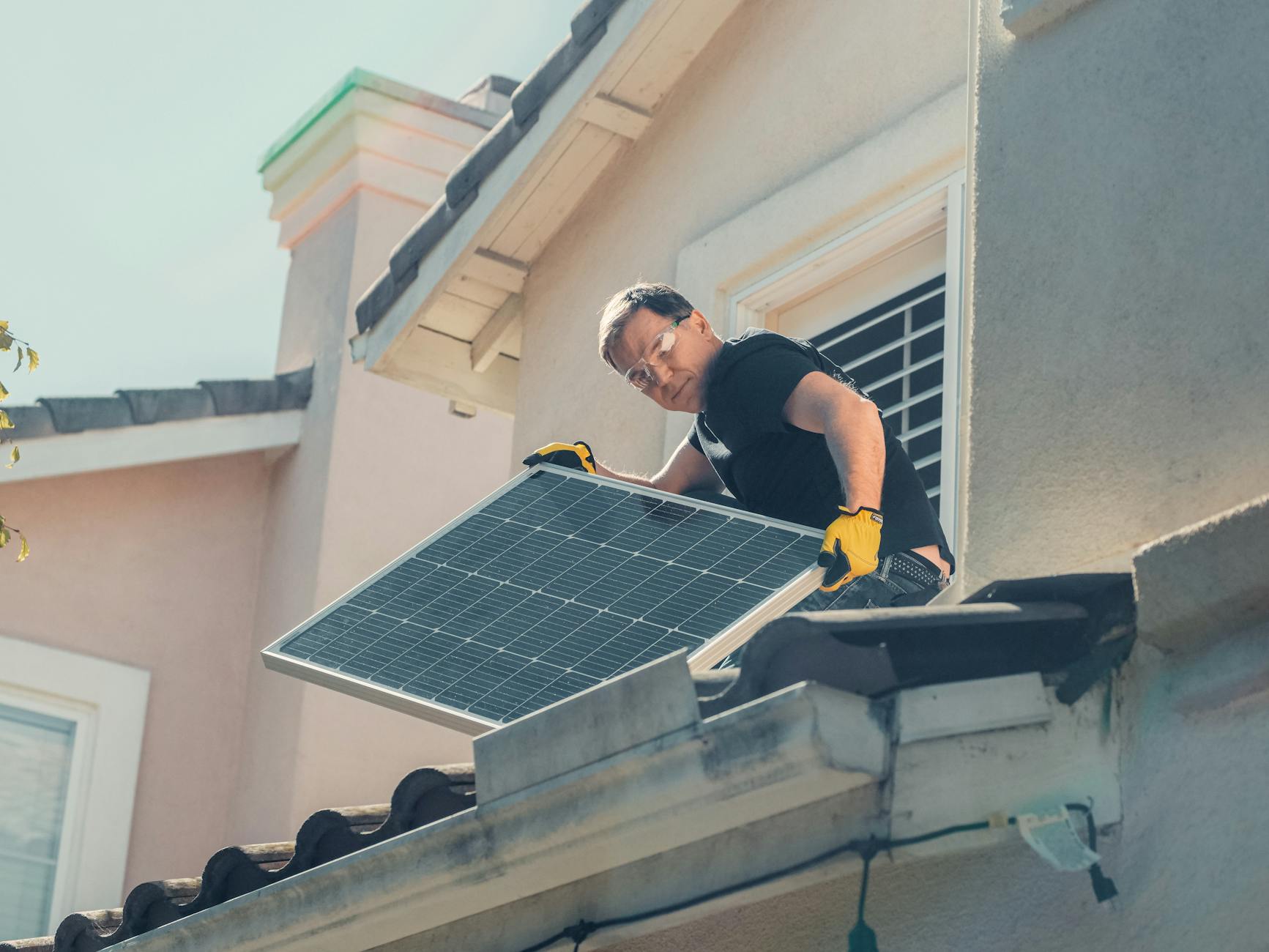
Solar Panel Roof Replacement Arizona: What Homeowners Need to Know
If you are researching solar panel roof replacement in Arizona, the most important decision you will make is whether your roof actually needs to be replaced before panels go on. Arizona's UV index regularly hits 11 or higher, which accelerates shingle degradation and makes roof condition a genuine factor in any solar project. This guide walks through how to assess your roof, when replacement is necessary, what it costs when panels are already installed, and how to avoid the expensive mistake of reroofing after your solar array is already live.
Do You Actually Need a New Roof Before Going Solar in Arizona?
Do Arizona homeowners always need a roof replacement before installing solar panels? No. If your roof has 10 or more years of remaining life, most reputable solar installers will mount on the existing surface. The key is an honest inspection, not a sales conversation.
Arizona's intense solar environment creates real wear patterns that differ from the rest of the country. NOAA climate data shows that Phoenix averages more than 299 sunny days per year, and UV index values above 11 are routine from April through September. That UV load degrades asphalt shingles faster than the national average, which is why Arizona shingles typically deliver 15 to 20 years of useful life rather than the 25 to 30 years advertised on the packaging.
Concrete and clay tile, which dominate older East Valley neighborhoods in Chandler, Gilbert, and Mesa, holds up significantly better, with realistic lifespans of 30 to 50 years under Arizona conditions. If you have a tile roof installed within the last 15 years with no cracked or slipped tiles, solar installation without replacement is almost always the right call.
When you do NOT need a new roof: - Tile roof under 20 years old with no structural damage - Shingle roof under 10 years old with no granule loss or visible cracking - Roof that passed a recent independent inspection with no noted failures - No active leaks or interior water staining
When you should replace before solar goes on: - Shingle roof over 15 years old in the Phoenix metro - Visible granule accumulation in gutters or downspout discharge - Multiple cracked, lifted, or missing tiles - Sagging decking or soft spots visible from the attic
See our roof inspection checklist for Arizona homeowners for a room-by-room walkthrough you can complete before calling anyone.
What Happens When You Need a Roof Replacement With Solar Panels Already Installed?
What does it cost and how complicated is it to replace a roof that already has solar panels on it? It is significantly more expensive and logistically complex than replacing a bare roof. Panel removal, storage, and reinstallation typically adds $1,500 to $6,000 to the total project cost depending on system size.
This scenario is the most preventable problem in the Arizona solar and roofing industry, yet it is extremely common. Homeowners sign a solar lease or loan, panels go up, and two or three years later the roof fails. At that point, every party involved has a different incentive.
The typical process looks like this:
- A licensed roofing contractor is hired for the reroofing work
- The solar company is contacted to schedule panel removal
- Panels are removed and either stored on-site or transported to a staging area
- The roof is torn off down to the decking or re-decked entirely
- New underlayment and roofing material is installed
- The solar company returns to reinstall and reconnect the array
- A new interconnection inspection may be required by your utility
The National Roofing Contractors Association recommends that any roofing contractor working around existing solar installations verify panel manufacturer specs before using nail guns or equipment near the array, as vibration and debris can damage microinverters and panel junction boxes.
Who pays for panel removal and reinstallation?
If you own your system outright, removal and reinstallation is your cost. If your system is leased, the solar company typically handles it but may charge a mobilization fee. Read your contract carefully. Some lease agreements include a clause that the homeowner is responsible for "providing unobstructed roof access," which courts have interpreted to include paying for removal.
How Much Does Solar Panel Roof Replacement Cost in Arizona?
What should an Arizona homeowner budget for a full roof replacement when solar panels are involved? Expect total project costs between $12,000 and $35,000 depending on roof size, material choice, and system size. That range is wide because tile and shingle replacements differ significantly in labor and material cost.
Here is a realistic cost breakdown for a 2,000 square foot single-story home in the Phoenix East Valley:
| Line Item | Low Estimate | High Estimate | |---|---|---| | Shingle roof replacement (2,000 sq ft) | $7,000 | $12,000 | | Tile roof replacement (2,000 sq ft) | $14,000 | $22,000 | | Solar panel removal (6-8 kW system) | $800 | $1,800 | | Solar panel reinstallation | $900 | $2,200 | | Permit fees (Maricopa County) | $150 | $400 | | Utility reconnection inspection | $0 | $250 |
The Remodeling Magazine Cost vs. Value Report consistently shows that roofing projects in the West South Central region return among the highest percentages of any home improvement category, which is relevant context when financing a combined roof and solar project.
For shingle material specifically, consider upgrading to a Class 4 impact-resistant shingle rated for Arizona monsoon hail exposure. Monsoon season runs June 15 through September 30, and hail events, while not annual, have caused widespread damage in East Valley communities including Queen Creek and San Tan Valley within the past decade.
Visit our Arizona roofing cost calculator for a more precise estimate based on your roof dimensions and material preference.
How Do Arizona's Climate Conditions Affect Roofing Under Solar Panels?
Does the Phoenix climate create unique problems for roofing material that sits under a solar array? Yes. Trapped heat under panel arrays can measurably accelerate shingle degradation, and poor ventilation combined with monsoon moisture intrusion creates conditions that do not exist in most other U.S. markets.
Research cited by the U.S. Department of Energy has found that rooftop solar panels can actually lower the temperature of the roof surface directly beneath them by shading that surface from direct sun. However, that benefit is partially offset in Arizona because the air gap between the panel and the roof surface can reduce attic ventilation if panels are mounted with inadequate clearance.
For Arizona specifically, installers should maintain a minimum 3-inch air gap between the panel back and the roof surface to allow thermal convection. This is not always enforced, and some budget installers use flush-mount brackets that eliminate the gap entirely. If your panels are flush-mounted and your shingles are already past 10 years, that combination accelerates granule loss significantly.
Monsoon considerations:
The monsoon season in Arizona introduces a second risk factor: moisture intrusion at roof penetrations. Every roof mount creates a penetration point. Properly installed mounts use flashed standoffs with EPDM gaskets and are sealed with roofing-grade butyl sealant. Improperly installed mounts are among the leading causes of leaks in Arizona solar homes. If you are seeing staining around a ceiling area near your array, that is worth investigating immediately before the next monsoon season.
How Do You Choose a Contractor for Solar Roof Replacement in Arizona?
What should Arizona homeowners look for when hiring a contractor to replace a roof that has solar panels on it? You need a roofing contractor with documented experience working around solar arrays and either a direct relationship with your solar company or experience coordinating with third-party solar crews.
In Arizona, roofing contractors must hold a valid license through the Arizona Registrar of Contractors. You can verify any contractor's license, complaints history, and bond status at no cost through the ROC online database before signing anything. This is a step that takes less than five minutes and eliminates most of the risk from hiring an unqualified crew.
Questions to ask every contractor you interview:
- Have you coordinated solar panel removal and reinstallation on a project within the last 12 months? Can you provide a reference?
- Do you carry commercial general liability of at least $1 million?
- Who is responsible if a panel is damaged during removal or reinstallation?
- Will you pull the permit, or will you ask me to pull an owner-builder permit?
- What underlayment do you use in Phoenix's climate, and why?
Avoid any contractor who asks you to pull an owner-builder permit for a job they are performing. That structure transfers the liability to you and disqualifies you from most workmanship warranty claims.
Also review our guide to hiring a licensed Arizona roofer before you collect bids.
Does a New Roof Affect Your Solar Warranty or Interconnection Agreement?
Will replacing your roof void your solar panel warranty or require a new utility interconnection agreement? Panel warranties are typically unaffected by re-roofing as long as the panels are removed and reinstalled by a qualified electrician or the original installer. However, your interconnection agreement may require a reinspection.
Most major panel manufacturers including Qcells and SunPower issue product warranties that are tied to the panels themselves, not to the installation configuration. As long as the panels are not physically damaged during removal and are reinstalled to manufacturer specifications, the product warranty remains valid.
The workmanship or installation warranty from your original solar installer is a different matter. Many installation warranties cover the penetrations and mounting hardware as installed. Once those mounts are removed and reinstalled, the original workmanship warranty may no longer apply unless the original installer performs the work. Get this clarified in writing before your reroofing project begins.
For interconnection, Arizona utilities including APS and SRP typically require a new interconnection inspection only if the system capacity changes. A straight removal and reinstallation of an identical system on a new roof surface does not usually trigger a new application. Confirm this directly with your utility's distributed generation department before assuming.
FAQ
How long does a combined roof replacement and solar reinstallation take in Arizona?
For a typical 2,000 square foot East Valley home, expect 3 to 5 business days total. Panel removal takes a half-day to a full day. Reroofing typically takes 1 to 2 days for shingles and 3 to 4 days for tile. Panel reinstallation adds another half-day to full day. Scheduling gaps between the roofing crew and solar crew are the most common source of delays.
Can I get a tax credit if I replace my roof at the same time as installing solar?
The federal residential clean energy credit under IRS guidance on Form 5695 applies to the solar energy system itself, not to roofing work. Roofing that is required to support a new solar installation may qualify for a partial credit if it functions as the mounting substrate, but this is a nuanced area. Consult a tax professional before making assumptions. The Arizona state energy credit has separate eligibility rules.
What roofing material lasts the longest under solar panels in Arizona?
Concrete tile is the strongest performer under Arizona conditions when paired with solar. Its 30 to 50 year lifespan means a tile roof installed today will likely outlast two or more solar system generations without needing replacement. Standing seam metal roofing is a second strong option because it allows clamp-based solar mounting that requires no roof penetrations at all, eliminating the primary leak risk.
What if my solar company is out of business when I need my roof replaced?
This is increasingly common as smaller solar installers in Arizona have closed since 2022. In this situation, hire a licensed electrical contractor who holds an Arizona solar contractor license through the ROC. They can assess your existing system, remove it safely, and reinstall it per original specifications. You will not have access to the original workmanship warranty regardless, so focus on finding a contractor who will issue their own warranty on the reinstallation work.
Should I replace my shingle roof with tile when I reroof for solar?
If your budget allows, upgrading from shingles to concrete tile during a combined roof and solar project is worth considering. The additional upfront cost is offset by not facing another reroofing project for 30 to 50 years, which means one less removal and reinstallation cycle for your panels. Get a comparison bid from your roofing contractor and factor in the panel R&R cost savings over a 30-year horizon.
Does going solar affect my homeowners insurance in Arizona?
Adding solar panels typically increases the insured value of your home, which can raise your premium modestly. After a reroof, you may qualify for a premium reduction, particularly if you upgraded to a Class 4 impact-resistant shingle. Notify your insurer of both the new roof and the solar installation. Failing to disclose material changes to the structure is one of the most common reasons Arizona insurers deny storm damage claims.
*For related reading, see our overview of Arizona monsoon roof preparation and our breakdown of tile vs. shingle roofing costs in the East Valley.*
Know your number before you call a roofer.
Free Roof Cost Estimate