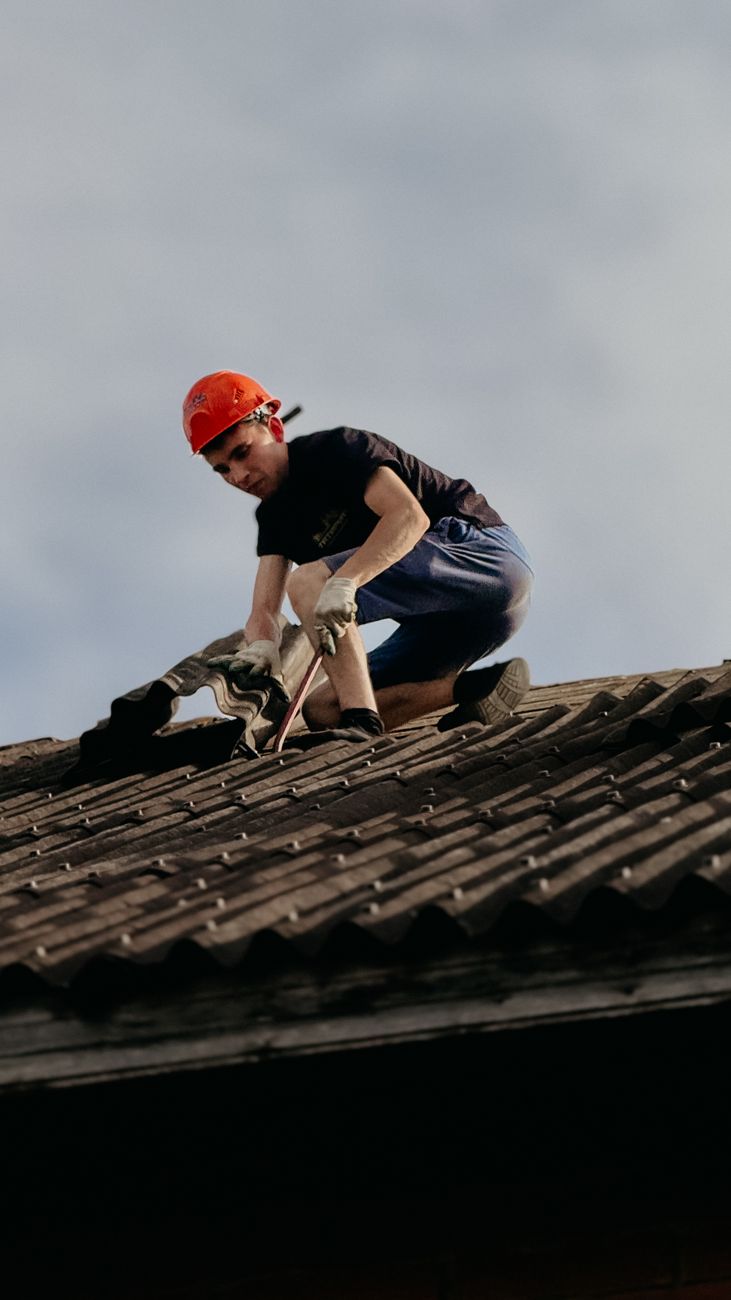
What Causes Roof Failure in Arizona: The 7 Real Culprits
TLDR: Arizona roofs fail faster than national averages because of a specific combination of stressors: UV index regularly above 11, roof surface temperatures exceeding 160°F in summer, felt underlayment that degrades in 15–20 years, flashing sealants that crack in 3–7 years, and monsoon storms that hit already-weakened systems. The failures are predictable and most are detectable before a leak appears. This guide identifies each failure mode, how long each takes to develop, and what to look for before interior damage occurs.
Arizona is one of the hardest climates on roofing materials in the country. Phoenix averages 299 sunny days per year. Summer UV index in the East Valley regularly exceeds 11, placing the region in the "extreme" category according to the National Weather Service. Roof surface temperatures hit 160°F or above on a typical July afternoon, temperatures that accelerate material degradation at every layer of the roof assembly.
The result: roofing materials in Arizona reach the end of their functional life significantly earlier than the national averages on which warranty ratings are based. Understanding what causes each failure mode gives homeowners the ability to catch problems before they become structural damage.
1. UV exposure and thermal shock
The most pervasive driver of Arizona roof failure is not any single storm, it is cumulative UV radiation and daily thermal cycling.
Asphalt shingles expand in heat and contract overnight as temperatures drop. In Phoenix, the daily temperature swing in summer often exceeds 30°F. Each expansion-contraction cycle stresses the shingle's bond to the substrate, accelerates granule loss, and causes the asphalt binder to oxidize and crack. The National Roofing Contractors Association puts the functional lifespan of asphalt shingles at 15–20 years in high-UV climates, not the 25–30 years printed on the warranty, which is calibrated to moderate conditions.
On tile roofs, UV degrades the mortar that secures ridge tiles and the rubber pipe jack boots around plumbing penetrations. Mortar at ridges and hips begins to crack and shrink within 10–15 years under Arizona exposure. Pipe jack rubber degrades in 5–8 years.
What to look for: Granule accumulation in gutters (asphalt shingles). Cracked or crumbling mortar visible at the ridge line from ground level. Pipe jack rubber that looks dried, cracked, or has pulled away from the vent pipe.
2. Underlayment failure
The leading cause of unexpected leaks on tile roofs in Arizona is underlayment failure, not the tile itself.
Tile roofs in Arizona commonly last 30–50 years. The felt underlayment beneath them lasts 15–20 years under desert UV and heat exposure. When underlayment fails, tile can appear intact from the ground while water freely enters the roof assembly during rain. The NRCA recommends synthetic underlayment for new tile installations in high-UV climates specifically because synthetic products outperform organic felt in sustained heat and UV environments.
Homes built in the 1990s and early 2000s throughout Mesa, Gilbert, Chandler, and Queen Creek used felt underlayment as standard. Many of those underlayments are now at or past their functional limit. A tile roof on a home in this era that has never had a full tear-off and underlayment replacement is a candidate for underlayment inspection regardless of whether leaks have appeared.
What to look for: Interior ceiling staining in areas where tile appears intact. Staining that appears or worsens after rain, then dries without obvious tile damage above it. Any moisture in the attic space during or after rain.
See how long Arizona roofing materials last for lifespan data by material type and underlayment class.
3. Flashing and sealant failure at penetrations
Every point where something passes through your roof, vent pipes, AC lines, skylights, chimneys, is a potential failure point. In Arizona, these are the most frequently overlooked source of early-stage leaks.
Flashing sealants in Arizona harden and crack in 3–7 years under heat and UV. A cracked sealant joint at a single penetration creates a direct path for water during rain. Monsoon rain is often wind-driven, meaning it enters gaps that vertical gravity-drain would miss.
Common penetration failures: - Pipe jacks: Rubber boots around plumbing vents degrade in 5–8 years. Cracked or open pipe jacks are among the most common single-point causes of roof leaks in the Phoenix metro - AC condenser penetrations: The junction where refrigerant lines pass through a flat or low-slope roof is frequently under-flashed or sealed with inadequate materials - Skylight perimeter flashing: Skylight frames expand and contract independently of the surrounding roof, stressing any sealant at the joint - Chimney counter-flashing: Step flashing at chimney bases relies on both metal flashing and sealant; sealant failure here is common on homes over 10 years old
What to look for: Water staining on ceilings directly below or near penetrations. Visible gaps or dried caulk at vent pipe bases, AC line penetrations, or skylight perimeters.
4. Poor attic ventilation
Inadequate attic ventilation is a silent accelerant to every other failure mode on this list.
The U.S. Department of Energy recommends a minimum of 1 square foot of ventilation area per 150 square feet of attic floor space. When ventilation is inadequate, attic temperatures in Arizona can exceed 160°F in summer. That heat load transfers directly into the roofing assembly above, accelerating shingle oxidation, baking felt underlayment, and drying out sealants faster than they would degrade with proper airflow.
Poor ventilation also traps monsoon-season moisture. Warm, humid air from July storms that enters the attic and cannot escape condenses on the cooler underside of the roof deck, introducing moisture damage that has nothing to do with a visible roof leak.
What to look for: Turbine vents that are not spinning in light wind (seized bearings). Gable or ridge vents blocked by debris or insulation pushed against the soffit. Attic that feels markedly hotter than outdoor temperature even in the evening.
5. Monsoon wind and hail damage
Arizona's monsoon season runs June 15 through September 30, with peak storm activity in July and August. The storms that cause roof damage are not the light afternoon showers, they are the high-wind microburst events and hail-producing cells that track along the Superstition Mountain corridor into the East Valley.
Wind damage on tile roofs most commonly lifts ridge and hip tiles where mortar has already degraded. On shingle roofs, wind above 60 mph can unseal the adhesive strip on standard architectural shingles. Hail damage to asphalt shingles creates impacts that remove granules and bruise the underlying mat, damage that accelerates UV degradation but may not produce leaks immediately.
The combination matters: a roof weakened by years of UV exposure fails under a monsoon storm that an intact roof would survive.
What to look for after a significant storm: Displaced or missing ridge tiles visible from the ground. Shingle tab edges lifted at corners. Interior ceiling staining that appears within 48 hours of a storm. Dented metal flashings or gutters (a strong indicator that hail was large enough to damage shingles).
For step-by-step storm documentation guidance, see our pre-monsoon roof inspection checklist. For emergency roof response in Mesa, see emergency roofing Mesa, AZ.
6. Ponding water on flat and low-slope roofs
Most Arizona single-family homes have at least one flat or low-slope section, an entryway, covered patio, or garage extension. These sections fail from a different mechanism than pitched roofs: ponding water.
Ponding is defined by the NRCA as water that remains on a roof surface 48 hours after rain has stopped. Chronic ponding on a flat roof degrades coating systems, eventually penetrates seams, and accelerates edge and drain deterioration. Foam roofs without a current silicone topcoat are especially vulnerable, bare foam absorbs moisture at an exponential rate once the topcoat fails.
The drainage geometry on many Arizona flat-roof sections was not engineered with Arizona monsoon rainfall rates in mind. A July storm dropping 1.5 inches of rain in 30 minutes overwhelms drains sized for standard rainfall assumptions. The fix is usually drain clearing and slope correction, not full replacement.
What to look for: Standing water visible on flat sections the day after rain. Bubbling or blistering on the roof coating surface. Soft spots when walking the perimeter (do not walk flat roof sections yourself, hire a contractor).
7. Poor installation workmanship
Installation errors are the failure mode that appears fastest and is most often blamed on the climate.
Common installation failures that show up within the first 1–5 years: - Underlayment installed with insufficient overlap at seams, creating water channels at joints - Tile installed over wet or improperly dried underlayment, trapping moisture from day one - Flashing nailed rather than properly bedded and sealed at penetrations - Improper foam application ratios that produce off-spec density, leading to early topcoat delamination - Insufficient fastener count on shingles in wind zones, Maricopa County building code specifies fastener requirements based on wind exposure category
An improperly installed roof in Arizona's climate fails significantly faster than a properly installed one. Arizona Registrar of Contractors license verification and a review of contractor complaint history before hiring are the best available protection against installation failures. Permitted work requires an inspection, pulling a permit is not just a legal requirement, it's the mechanism that puts a third-party check on installation quality. See Maricopa County roofing permit requirements for what that inspection covers.
What to do when you spot early failure signs
Early detection almost always means the difference between a repair and a replacement. If you identify any of the warning signs above:
- Document with photos and dates before calling anyone
- Get a written assessment from a licensed R-42 contractor, not just a verbal summary and a bid number
- Apply the repair vs. replacement decision framework before committing to either scope
- If the failure was caused by a storm event, document before any repair work begins, starting work first can compromise an insurance claim
Use our free cost estimator to get a baseline on repair vs. replacement cost for your home before your contractor assessment.
Frequently Asked Questions
How fast do Arizona roofs fail compared to national averages? Asphalt shingles rated for 30 years realistically last 15–20 years in Phoenix metro. Felt underlayment rated for 20–25 years lasts 15–20 years under Arizona UV. Flashing sealants that might last 10+ years in moderate climates need inspection at 5–7 years here. The gap between rated lifespan and actual performance in Arizona is larger than in most U.S. markets.
Can a roof look fine and still be failing? Yes, particularly with underlayment failure on tile roofs. Tile can appear intact from the ground while the underlayment beneath it has been allowing water infiltration for months. Interior ceiling staining is often the first visible indicator, by that point, moisture has already penetrated the deck and insulation. Annual attic inspection is more reliable than ground-level visual checks for catching this.
Does homeowner's insurance cover roof failure in Arizona? Insurance covers sudden storm damage, not age-related wear or gradual deterioration. Underlayment failure on a 20-year-old tile roof is not a covered loss. A monsoon storm that lifts ridge tiles on a roof where mortar had already degraded may be partially covered, the storm event is covered, but adjusters may cite pre-existing conditions to reduce the payout. Documentation of roof condition before storm season matters.
Is it safe to walk on my Arizona roof to check for damage? No for tile roofs, foot traffic on tile cracks tiles and creates new failure points. Shingle roofs can tolerate careful foot traffic but steeper pitches are a fall risk without proper equipment. Ground-level observation, interior attic inspection, and gutter checks cover most early warning signs without requiring roof access.
Know your number before you call a roofer.
Free Roof Cost Estimate