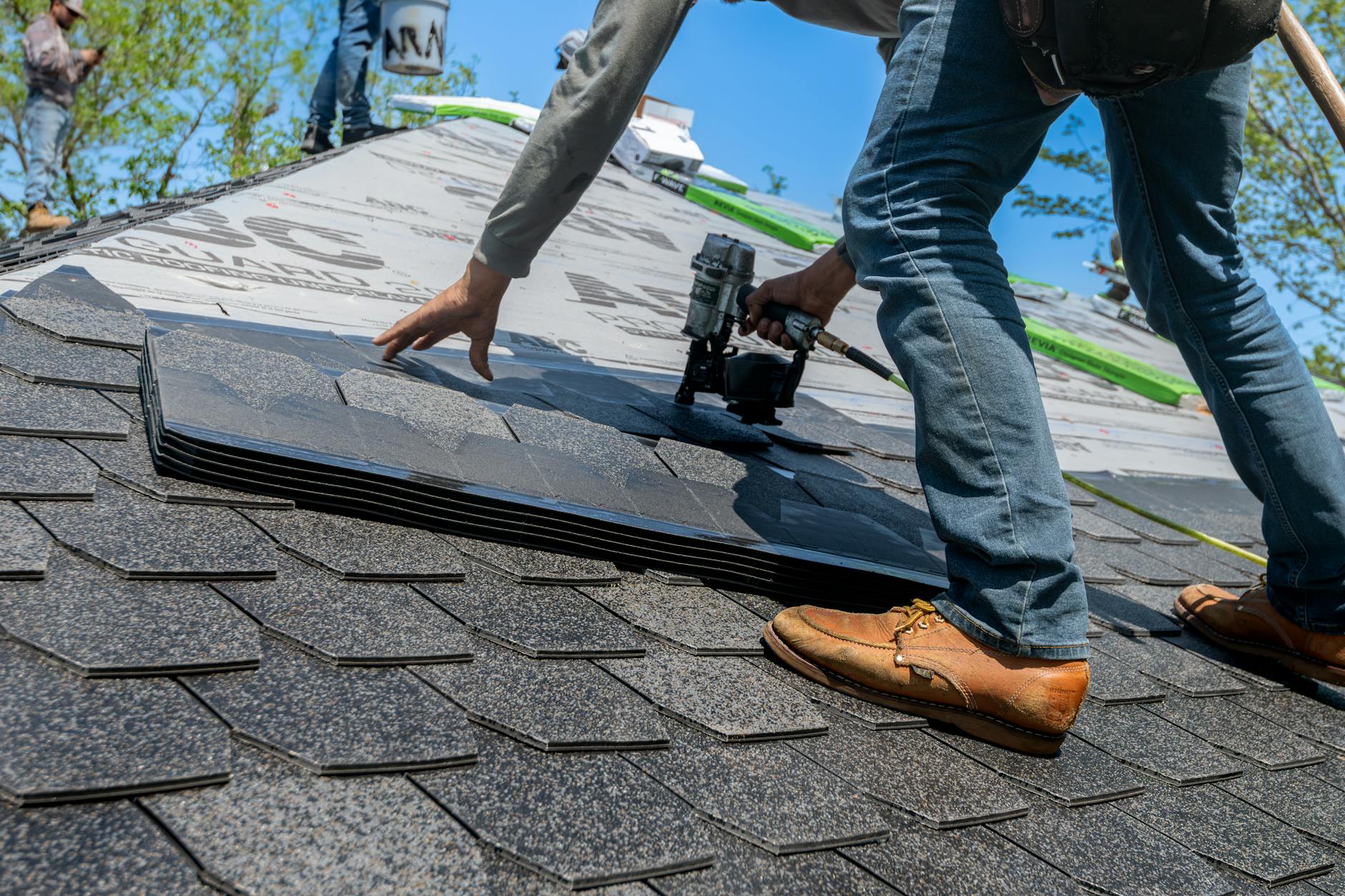
Roof Replacement Cost Las Vegas NV: 2026 Pricing Guide
The [average roof replacement cost in Las Vegas NV runs between $8,500 and $22,000](https://www.gaf.com/en-us/plan-design/homeowner-education/roof-cost) for a typical single-family home, depending on material, square footage, and roof complexity. Concrete tile and flat roofing systems common to the Las Vegas valley carry different cost profiles than asphalt shingles, so material choice is the single biggest lever on your final bill. This guide breaks down real price ranges, explains what drives costs up or down in the Mojave Desert climate, and tells you honestly when you may not need a full replacement at all. Read this before you sign any contract.
What Is the Average Roof Replacement Cost in Las Vegas NV?
What should a Las Vegas homeowner expect to pay for a full roof replacement in 2026?
Most Las Vegas homeowners pay between $9,000 and $18,000 for a full replacement on a 1,500 to 2,500 square foot home. Premium materials, steep pitches, or multi-story homes push costs toward $25,000 or higher.
The Remodeling Magazine Cost vs. Value Report consistently shows roofing as one of the highest-return home improvement projects in the Mountain/Pacific region. In Las Vegas specifically, the desert climate accelerates material degradation, which means replacement cycles can be shorter than national averages if the wrong material is installed.
Here is a working price range table for 2026:
| Roof Material | Avg. Cost Per Square (100 sq ft) | Typical Total (1,800 sq ft home) | |---|---|---| | 3-Tab Asphalt Shingle | $350 - $500 | $7,500 - $11,000 | | Architectural Shingle | $450 - $700 | $9,500 - $15,000 | | Concrete Tile | $700 - $1,100 | $15,000 - $24,000 | | Clay Tile | $900 - $1,500 | $19,000 - $33,000 | | TPO / Flat Membrane | $400 - $650 | $8,500 - $14,000 | | Metal (Standing Seam) | $900 - $1,400 | $19,500 - $30,000 |
These figures include materials, labor, tear-off of one existing layer, and basic underlayment. They do not include structural repairs, decking replacement, or permit fees.
What Factors Drive Roof Replacement Costs Up in Las Vegas?
Why does one Las Vegas roof replacement quote come in $5,000 higher than another for the same house?
Six variables account for most of the pricing spread you will see between contractor quotes: roof size, pitch complexity, material choice, number of tear-off layers, decking condition, and permit costs. Understanding each one lets you evaluate quotes intelligently rather than just picking the lowest number.
Roof Size and Pitch
Roofing is priced by the square (100 square feet of roof surface). Your roof surface area is almost always larger than your home's footprint because of pitch. A 2,000 square foot home with a steep 8:12 pitch may have 2,600 or more squares of actual roof surface.
Steep pitches also require additional safety equipment and slower installation, which raises labor costs by 15 to 30 percent. The National Roofing Contractors Association notes that pitch multipliers are a standard part of professional estimating, not a contractor upsell.
Decking and Structural Condition
When a crew tears off old material, they expose the roof deck. In Las Vegas, years of UV exposure at a UV index that routinely hits 11 or higher causes OSB and plywood decking to become brittle and delaminate faster than in cooler climates. Replacing damaged decking runs $80 to $120 per sheet on top of your base quote. Do not skip the decking inspection, and ask any contractor to show you photos before they close up the roof.
Number of Existing Layers
Nevada building code allows a maximum of two roofing layers on most residential structures before a full tear-off is required. If your home already has two layers, tear-off labor and disposal costs will be higher, often adding $1,000 to $2,500 to the project total.
Permit Fees in Clark County
Clark County and the City of Las Vegas both require permits for roof replacements. Permit fees typically run $150 to $450 depending on project valuation. Any contractor who suggests skipping the permit to save money is putting your homeowner's insurance coverage and future home sale at legal risk. The Clark County Building Department posts current fee schedules online.
How Does the Las Vegas Climate Affect Roofing Material Choice?
Does the Mojave Desert climate change which roofing material makes the most financial sense in Las Vegas?
Yes, significantly. Intense UV radiation, extreme summer heat above 115 degrees F, and monsoon-season wind events all shorten the life of materials that perform well in milder climates. Material selection in Las Vegas is not just a style decision.
The NOAA Climate Data for Nevada documents Las Vegas receiving roughly 294 sunny days per year, with summer UV index values consistently in the extreme range. This is comparable to the Phoenix metro conditions that roofinstall.net covers extensively, where UV index 11+ accelerates shingle granule loss and reduces the effective life of standard 3-tab asphalt shingles to 12 to 18 years rather than the labeled 25 to 30 years.
Asphalt Shingles in Las Vegas
Asphalt shingles are the most affordable option but carry the shortest lifespan in this climate. Standard 3-tab shingles often fail in 12 to 15 years in the Las Vegas valley. Architectural (dimensional) shingles with a Class 4 impact rating and algae-resistant granules perform better and are often the minimum worth installing. Look for shingles rated for high-wind environments, since the Las Vegas valley experiences wind gusts associated with monsoon outflow events from late June through September, a pattern similar to Arizona monsoon season June 15 through September 30.
Concrete and Clay Tile
Concrete and clay tile are the dominant roofing materials on Las Vegas homes built after 1990. They handle UV radiation and heat far better than asphalt, with lifespans of 30 to 50 years when properly installed and maintained. The higher upfront cost is offset by the longer replacement cycle. The tradeoff is weight: many older Las Vegas homes require a structural assessment before tile can be installed. GAF's product documentation for its tile underlayment systems notes that proper underlayment is critical because tile itself does not form a waterproof barrier.
Flat and Low-Slope Roofing
Many Las Vegas homes and casita additions feature flat or low-slope sections. TPO (thermoplastic polyolefin) membrane and modified bitumen are the most common systems. TPO reflects solar heat effectively, which reduces cooling loads, a meaningful consideration when summer electricity bills in Las Vegas regularly exceed $300 to $400 per month. Flat roofs require a qualified contractor who understands proper drainage design, since even light monsoon rain can cause ponding that leads to premature membrane failure.
Metal Roofing
Standing seam metal roofing has the longest lifespan of any material discussed here, often 40 to 70 years, and reflects radiant heat effectively. The high upfront cost puts it out of reach for many homeowners, but for those planning to stay in their home long-term, the total cost of ownership over 40 years may be lower than two cycles of tile replacement.
Do You Actually Need a Full Roof Replacement?
How do you know whether a repair will solve the problem or whether a full replacement is necessary?
Many homeowners are pushed toward replacements they do not need. A qualified inspection is the only honest answer. Here are the real indicators that separate repair territory from replacement territory.
You likely do NOT need a full replacement if:
- Your roof is less than 15 years old and the damage is isolated to one area
- You have fewer than 3 to 5 missing or cracked tiles after a wind event
- A licensed inspector finds no decking rot and no active leaks in multiple locations
- Your flat roof has a membrane failure in one seam that can be patched and re-sealed
You likely DO need a full replacement if:
- Asphalt shingles show widespread granule loss, curling, or brittleness across most surfaces
- There are multiple active leak points not traceable to a single source
- Your tile underlayment is original and over 20 years old, even if the tiles themselves look intact (underlayment failure is the hidden cost in Las Vegas tile roofs)
- The roof deck has widespread soft spots or rot discovered during inspection
The NRCA's guidance on roof inspections is a useful starting point for understanding what a professional inspector should be evaluating. Get at least two independent inspections before committing to a full replacement on a roof under 20 years old.
How to Hire a Roofing Contractor in Las Vegas Without Getting Burned
What should Las Vegas homeowners look for when vetting a roofing contractor?
The contractor you hire matters as much as the material you choose. Las Vegas has a large population of storm-chasing contractors who move into the market after wind events and disappear before warranty claims can be made.
License and Insurance Verification
Nevada requires roofing contractors to hold a C-15 license issued by the Nevada State Contractors Board. You can verify any contractor's license status, bonding, and complaint history directly on the NSCB website. Do not hire any contractor who cannot provide their C-15 license number before the first conversation ends.
What a Legitimate Quote Should Include
A written quote from a reputable contractor should specify:
- Material manufacturer and product line (not just "shingles" or "tile")
- Number of layers being torn off
- Underlayment type and weight
- Flashing materials and replacement scope
- Decking repair allowance or per-sheet price
- Permit procurement responsibility
- Warranty terms: both manufacturer product warranty and contractor workmanship warranty
Workmanship warranties in the Las Vegas market typically run 2 to 5 years. Manufacturer warranties on premium shingles and tile systems can run 30 to 50 years, but most require installation by a certified contractor to remain valid. Ask to see the contractor's manufacturer certification documentation before signing.
Storm Damage and Insurance Claims
If your roof was damaged in a wind or hail event, your homeowner's insurance may cover part or all of the replacement cost. Contact your insurer before signing any contract with a contractor, and be wary of contractors who offer to "handle the insurance claim for you." This arrangement, called assignment of benefits, can lead to disputes that delay your project and may violate Nevada insurance regulations. Review your policy or speak with a licensed public adjuster independently.
What Is the Cost Breakdown for a Typical Las Vegas Roof Replacement?
Where does the money actually go when a Las Vegas homeowner pays $14,000 for a new roof?
Understanding the cost breakdown helps you evaluate whether a quote is reasonable and identify where legitimate variations come from.
For a hypothetical $14,000 architectural shingle replacement on a 2,000 square foot Las Vegas home:
| Cost Category | Estimated Amount | % of Total | |---|---|---| | Materials (shingles, underlayment, flashing) | $5,800 | 41% | | Labor (installation crew) | $4,200 | 30% | | Tear-off and disposal | $1,500 | 11% | | Decking repair allowance | $700 | 5% | | Overhead and profit (contractor) | $1,400 | 10% | | Permit fee | $350 | 3% |
These percentages shift when you move to tile or metal, where material costs consume a larger share. On a concrete tile job, materials and labor together often represent 85 to 90 percent of the total bill.
How Does Las Vegas Compare to Phoenix for Roof Replacement Costs?
Are roofing costs in Las Vegas similar to or different from Phoenix and the Arizona East Valley?
Las Vegas and the Phoenix metro East Valley share similar climate stressors: extreme UV radiation, triple-digit summer heat, and monsoon-pattern wind events. Roofing costs in both markets are higher than national averages for equivalent materials because of the climate demands on installation quality.
Labor rates in Las Vegas run slightly higher than in Phoenix due to a smaller pool of specialty roofing contractors and higher general cost of living. Concrete tile, the dominant residential material in both markets, costs roughly 5 to 10 percent more in Las Vegas than in the Phoenix East Valley when comparing similar contractor tiers.
If you are comparing roofing projects across the region, the cost and material considerations for Phoenix area homes provide a useful baseline. The climate variables are similar enough that contractor advice relevant to one market usually applies to the other.
Frequently Asked Questions
How long does a roof replacement take in Las Vegas?
Most residential roof replacements in Las Vegas take one to three days for the installation itself. Permit processing adds two to five business days in Clark County. Large homes, complex rooflines, or significant decking repairs can extend installation to four or five days. A contractor who promises to complete a tile roof on a large home in a single day should be asked to explain their crew size and process in detail.
Is there a best time of year to replace a roof in Las Vegas?
Late September through November and February through April are generally the best windows. Summer heat above 110 degrees F slows asphalt shingle installation because shingles become soft and footsteps can cause surface damage. Monsoon season, which runs roughly from late June through September, brings wind and sudden rainstorms that interrupt work and expose your open deck to water. That said, professional contractors work year-round in Las Vegas, and a skilled crew can manage summer installations with proper scheduling.
Does homeowner's insurance cover roof replacement in Nevada?
Nevada homeowner's insurance policies typically cover roof damage caused by sudden events like wind, hail, or falling objects, but not damage caused by age or lack of maintenance. Many insurers now use actual cash value rather than replacement cost for older roofs, meaning depreciation significantly reduces your payout. Review your policy's roof coverage language carefully, and ask your insurer whether your policy uses ACV or RCV for roof claims before you file.
Can I stay in my home during a roof replacement?
Yes, in most cases. Roof replacement is loud and there will be debris near the home's perimeter, but most homeowners remain in the house during the project. If you have young children or pets, plan to keep them away from the exterior work zone during active hours. Contractors should use tarps to protect landscaping and collect fallen nails with magnetic rollers at the end of each day.
What permits are required for roof replacement in Las Vegas?
Both the City of Las Vegas and Clark County unincorporated areas require building permits for full roof replacements. Henderson, North Las Vegas, and other municipalities within the metro area have their own permit requirements. Your contractor should pull the permit as part of the project. A final inspection by the building department is typically required before the permit is closed. Skipping the permit can create problems when you sell the home and may void your manufacturer's material warranty.
How do I know if my tile underlayment needs replacement even if my tiles look fine?
This is one of the most commonly missed issues on Las Vegas homes built in the 1990s. The concrete or clay tiles themselves may look intact, but the underlayment beneath them waterproofs the roof. Original 15-pound felt underlayment from the early 1990s has a real-world lifespan of 15 to 20 years in desert UV conditions. If your home is 20 or more years old and has never had the underlay
*Related reading on RoofInstall.net:*
- Roof Replacement Cost in Tucson, AZ: 2026 Pricing Guide
- Roof Replacement Cost in Sun City AZ: 2026 Homeowner Pricing Guide
Know your number before you call a roofer.
Free Roof Cost Estimate