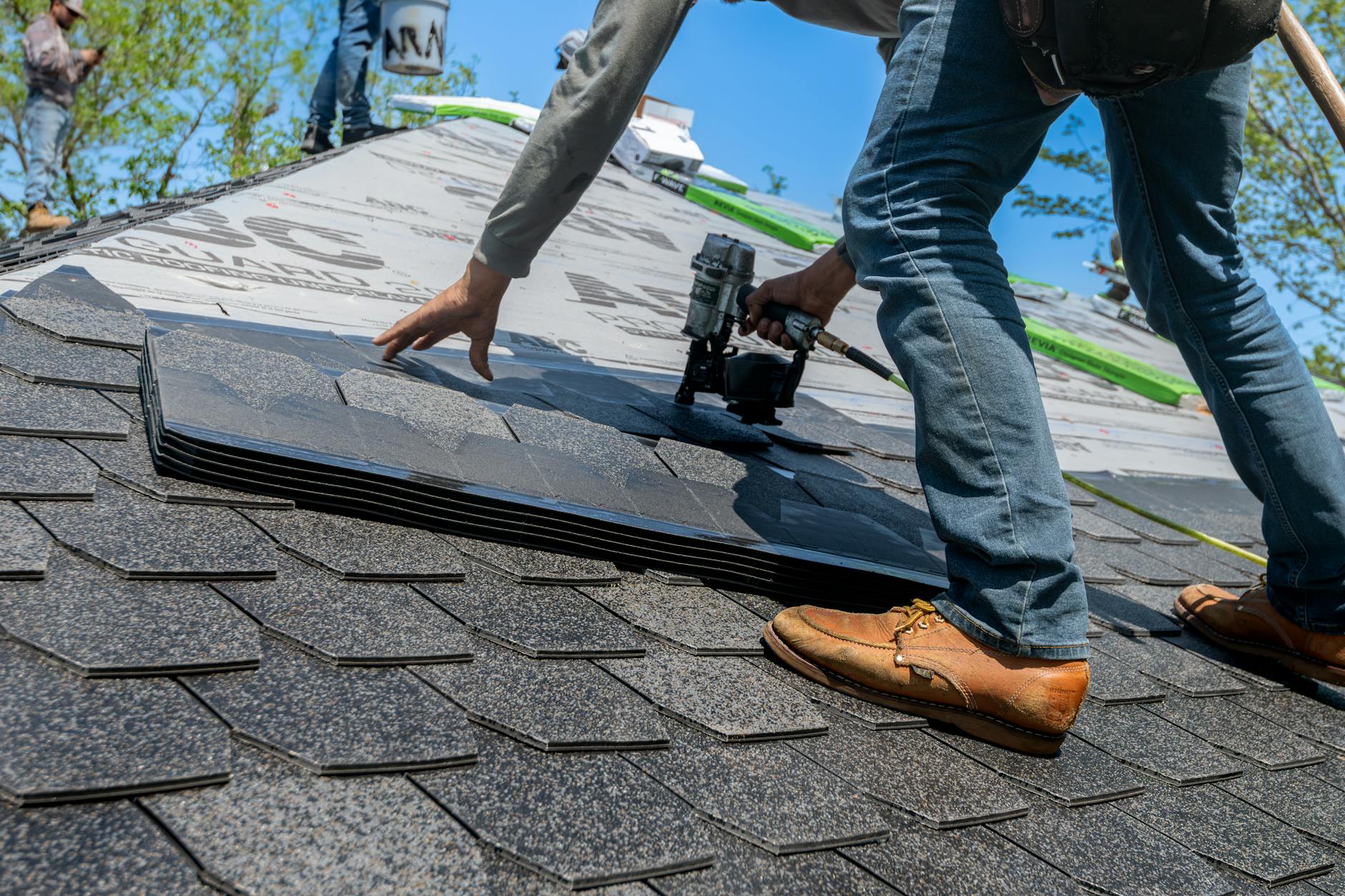
Roof Replacement Cost in Peoria AZ: 2026 Pricing Guide
Roof replacement cost in Peoria AZ typically runs between $8,000 and $22,000 for most single-family homes, depending on roof size, material, and pitch. Asphalt shingles sit at the lower end of that range, while concrete or clay tile, the dominant material in Peoria's master-planned communities, pushes costs higher. Peoria's desert climate adds real wear pressure: a UV index that regularly hits 11 or above accelerates material breakdown faster than in most U.S. cities. This guide gives you real numbers, explains what drives price differences, and tells you honestly when a full replacement is not yet necessary.
What Does Roof Replacement Cost in Peoria AZ?
What is the average price to replace a roof in Peoria, Arizona?
For a standard 1,800 to 2,400 square foot home, most Peoria homeowners pay between $9,000 and $18,500 for a full roof replacement. Material choice is the single biggest price driver, followed by roof pitch and tear-off requirements.
The table below breaks down installed cost estimates by material type. These figures reflect Peoria-area contractor pricing as of mid-2026 and assume a standard gable roof with one layer of existing material to remove.
| Material | Cost per Square (100 sq ft) | Typical Total (2,000 sq ft home) | |---|---|---| | 3-tab asphalt shingle | $350 - $500 | $7,000 - $10,000 | | Architectural shingle | $450 - $650 | $9,000 - $13,000 | | Concrete tile | $700 - $1,100 | $14,000 - $22,000 | | Clay tile | $900 - $1,400 | $18,000 - $28,000 | | Foam (SPF) | $400 - $600 | $8,000 - $12,000 | | TPO / flat membrane | $350 - $550 | $7,000 - $11,000 |
Labor in Maricopa County runs roughly $150 to $300 per square on top of materials, depending on pitch complexity and season. Contractors often charge premium rates during the pre-monsoon rush in May and June when demand spikes.
Why Are Peoria Roof Replacement Costs Different From National Averages?
Why does Phoenix West Valley pricing differ from what I see on national estimator websites?
National averages frequently undercount the real cost of Arizona roofing because they ignore desert-specific requirements: heavier underlayment, cool-roof coatings mandated by Peoria's building code, and the physical difficulty of working in summer heat.
Remodeling Magazine's annual Cost vs. Value report consistently shows that roofing ROI varies significantly by region. In the Southwest, material durability against UV degradation commands a real cost premium. Peoria sits within the Phoenix metro, where NOAA climate data documents average annual solar radiation levels among the highest in the continental U.S. That radiation load is a primary reason why asphalt shingles that last 25 to 30 years in the Midwest often reach the end of useful life in 15 to 20 years in Peoria.
Additional regional factors:
- Cool roof requirements. The City of Peoria enforces Title 24-aligned energy codes that require minimum solar reflectance on re-roofing projects. This affects product selection and adds cost.
- Monsoon preparation. The National Weather Service defines the Arizona monsoon season as June 15 through September 30. Contractors price in additional flashing and sealant work to handle the abrupt shift from dry heat to heavy, wind-driven rain.
- Permit fees. Peoria building permits for residential re-roofing are required and typically add $150 to $400 to project cost depending on scope.
What Factors Change the Final Price Most?
What variables will push my specific quote higher or lower than the averages above?
Roof size, pitch, existing layers, and decking condition are the four factors that most frequently cause final invoices to deviate from initial estimates. A steep pitch or rotted decking can add 20 to 40 percent to a base quote.
Roof Size and Pitch
Contractors measure roofing in "squares", one square equals 100 square feet of roof surface. A flat or low-slope roof at 1,800 square feet of living space might yield 18 to 20 roofing squares. The same footprint with a 6:12 pitch can yield 22 to 26 squares once slope is factored in. Pitch also affects labor cost because steeper roofs require additional safety equipment and slower work pace.
Tear-Off and Decking
Arizona building code generally allows one layer of roofing over an existing layer. If your home already has two layers, full tear-off is required before new material goes down. Tear-off adds $100 to $200 per square to the project. Once decking is exposed, contractors may find rot or deteriorated OSB panels from monsoon water intrusion. Decking replacement runs $2 to $5 per square foot for materials and labor.
Material Availability and Supply Chain
Tile is the dominant roofing material in Peoria's communities like Vistancia, Westwing Mountain, and Fletcher Heights. Concrete tile is generally stocked locally, but matching a specific discontinued profile for a partial replacement can extend project timelines and cost. The National Roofing Contractors Association recommends homeowners confirm material availability before signing a contract, particularly for tile profiles from the 1990s and early 2000s.
Time of Year
Roofing demand in Peoria peaks twice annually: before monsoon season (April through early June) and in fall after monsoon damage inspections (October through November). Scheduling work during off-peak windows, mid-January through March, frequently yields better contractor availability and occasionally lower bids.
What Roof Materials Work Best in Peoria's Climate?
Which roofing material holds up best against Peoria's heat, UV, and monsoon conditions?
Concrete and clay tile consistently outperform other materials in Peoria's desert climate. They are non-combustible, resist UV degradation effectively, and manage thermal mass well. Their higher upfront cost is offset by a 30 to 50 year lifespan versus 15 to 20 years for asphalt.
Concrete Tile
Concrete tile is the most common material on Peoria homes built after 1990. It handles heat well, qualifies for cool-roof status with the right pigment, and is widely available in profiles that match existing neighborhood aesthetics. Installed cost ranges from $700 to $1,100 per square. Manufacturer warranty documentation from major suppliers like Boral and Eagle Roofing specifies performance expectations under high UV exposure. Read manufacturer technical data sheets before selecting a product.
Clay Tile
Clay tile is more expensive than concrete but lighter per unit and more resistant to freeze-thaw cycles, which matters less in Peoria but extends longevity. Many HOAs in upscale Peoria communities specify clay tile by covenant. Installed cost runs $900 to $1,400 per square.
Architectural Asphalt Shingles
Asphalt shingles cost significantly less upfront but carry a shorter lifespan in this climate. The Department of Energy's roofing research confirms that dark-colored asphalt roofs in high-solar-gain climates absorb heat that transfers into living spaces, increasing cooling loads. If you choose asphalt, select a Class 4 impact-resistant product rated for high-wind and UV exposure, and budget for replacement within 15 to 20 years.
Spray Polyurethane Foam (SPF)
Foam roofing is common on flat or low-slope sections of Peoria homes and on commercial-style additions. It provides seamless waterproofing and good insulation value. It requires recoating every 10 to 15 years to maintain the protective topcoat, which adds ongoing maintenance cost. See our [/services/foam-roofing/] page for a full breakdown.
Do You Actually Need a Full Replacement?
How do I know if I need a full roof replacement or just repairs?
Many Peoria homeowners are sold full replacements when targeted repairs would solve the problem. A second opinion from an independent inspector is worth $200 to $400 if a contractor is recommending full replacement on a roof under 15 years old.
Signs a full replacement is genuinely warranted:
- Asphalt shingles showing widespread granule loss across multiple roof planes
- Tile that is cracked, slipping, or missing in large sections with compromised underlayment beneath
- Decking that is soft, spongy, or visibly deteriorated across more than 30 percent of the roof area
- Interior water staining on multiple ceilings indicating systemic waterproofing failure
- Foam roof with alligatored, peeling topcoat that has not been recoated and shows foam degradation
Signs you likely do NOT need a full replacement yet:
- A few cracked or broken tiles with intact underlayment beneath
- One or two areas of lifting or missing shingles after a storm
- A small flashing leak around a vent, chimney, or skylight
- Foam roof with intact foam but oxidized or thin topcoat
The NRCA recommends that homeowners get at least two contractor assessments before committing to full replacement. We also offer guidance on how to evaluate repair vs. replacement decisions at [/blog/roof-repair-vs-replacement-arizona/].
How to Get an Accurate Quote in Peoria
What should I do to make sure a roofing bid is accurate and not padded?
Ask for a line-item written estimate that separates material, labor, tear-off, permitting, and disposal costs. Vague lump-sum bids make it impossible to compare contractors fairly.
Steps to get a reliable quote:
- Get three bids minimum. The spread between high and low bids in Peoria can exceed $5,000 on a mid-sized tile job. Outliers in either direction deserve scrutiny.
- Verify licensing. Arizona requires roofing contractors to hold a ROC license. Verify any contractor at the Arizona Registrar of Contractors public database.
- Ask about permit handling. A legitimate contractor pulls the permit and schedules the city inspection. If a contractor asks you to pull your own permit, that is a red flag.
- Confirm material specifics in writing. The bid should name the exact product, manufacturer, color, and warranty tier being installed.
- Check manufacturer warranty registration. Most tile and shingle manufacturers require the contractor to register the installation for the full warranty to be valid. Confirm this is included in the scope.
You can also review our [/blog/how-to-hire-a-roofer-arizona/] checklist before signing any contract.
What About Insurance Claims for Roof Damage in Peoria?
Can I get my insurance to cover roof replacement after monsoon or hail damage?
Arizona homeowners policies vary widely in how they handle roof claims. Monsoon wind and hail damage is generally covered, but policies with ACV (actual cash value) provisions will depreciate the payout based on roof age rather than paying full replacement cost.
After a significant storm, document damage with photos before any temporary repairs are made. File the claim promptly. The Arizona Department of Insurance and Financial Institutions provides guidance on policyholder rights during the claims process, including the right to request reinspection if you dispute an adjuster's assessment.
Be cautious of storm-chasing contractors who arrive after a monsoon event and pressure you to sign an Assignment of Benefits (AOB) form before your insurer has assessed the damage. Arizona law has specific provisions around AOB agreements that may limit your control over the claim.
FAQ
How long does a roof replacement take in Peoria AZ?
Most residential tile replacements take two to four days for the crew work, plus time for the permit inspection. Asphalt shingle replacements on smaller homes can complete in one day. Supply delays for matching tile profiles can extend total project timelines.
Is it cheaper to replace a roof before or after monsoon season?
Pre-monsoon timing (April to early June) brings higher demand and sometimes higher prices. Late winter (January to March) is typically the lowest-demand window in Peoria, which can improve negotiating position. Avoid delaying a failing roof into monsoon season, water intrusion damage from a single storm can cost more to remediate than the roof itself.
How much does a permit cost for roof replacement in Peoria AZ?
Peoria building permits for residential re-roofing generally range from $150 to $400 depending on project valuation and scope. Your contractor should include this in their bid and handle the application.
Does my HOA have to approve my new roof material in Peoria?
Many Peoria communities, particularly in Vistancia and Lake Pleasant Heights, have CC&Rs that specify approved roofing materials and colors. Submit your material selection to the HOA architectural review committee before signing a contract. Violations can require costly re-work.
What is the lifespan of a tile roof in Peoria?
Concrete tile in Peoria typically lasts 30 to 50 years with proper maintenance, though the underlayment beneath the tile generally requires replacement at 20 to 25 years. Clay tile can last longer. Inspect underlayment condition whenever tiles are disturbed for repairs.
How do I know if a Peoria roofing contractor is legitimate?
Verify their ROC license number at the Arizona Registrar of Contractors, confirm they carry general liability and workers' compensation insurance, check reviews on multiple platforms, and ask for references from completed jobs in Peoria specifically. Avoid any contractor who cannot provide a written, itemized estimate.
*Related reading: [/blog/roof-repair-vs-replacement-arizona/] | [/blog/how-to-hire-a-roofer-arizona/] | [/services/foam-roofing/] | [/blog/arizona-monsoon-roof-prep/] | [/services/tile-roofing/]*
*Related reading on RoofInstall.net:*
- Roof Replacement Cost in Tucson, AZ: 2026 Pricing Guide
- Roof Replacement Cost in Sun City AZ: 2026 Homeowner Pricing Guide
- Roof Replacement Cost in Gilbert, AZ: 2026 Pricing Guide
Know your number before you call a roofer.
Free Roof Cost Estimate