Storm Damage Roofing in Gilbert, AZ
TLDR: Gilbert sits in one of the most active hail corridors in the Phoenix metro, storms moving northwest off the Superstition Mountains hit Power Ranch, Morrison Ranch, and Cooley Station regularly during monsoon season. Tile roofs handle smaller hail well but crack under 1-inch-plus stones. After a Gilbert storm event, document damage thoroughly before calling your insurer, get an independent contractor assessment first, and verify any roofer's ROC license before they get on your roof, storm chasers follow every major East Valley storm system.
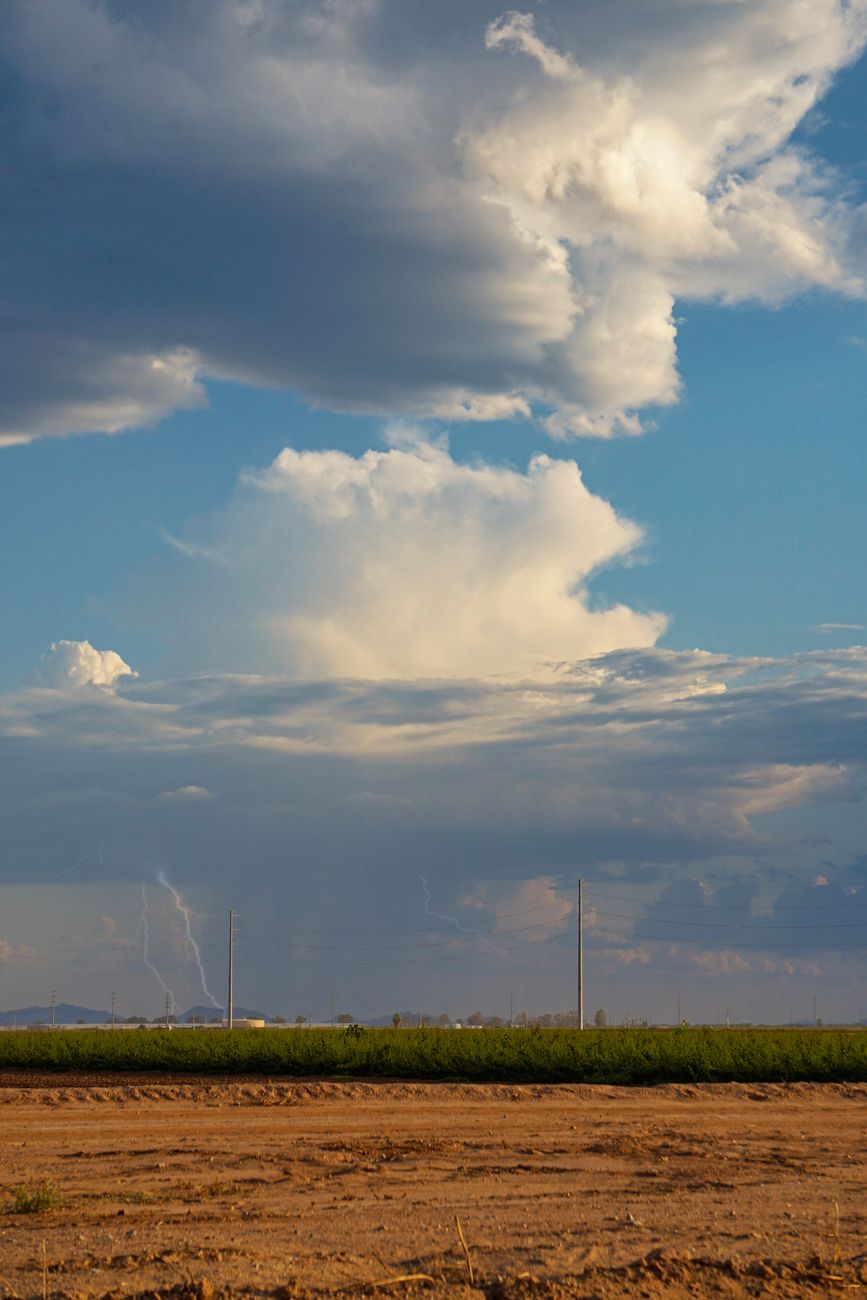
Gilbert's position at the foot of the Superstition Mountains makes it one of the East Valley cities most exposed to severe monsoon activity. Supercell thunderstorms that develop over the mountains often track northwest directly through Gilbert, and the hail those storms produce, regularly reaching 1 to 1.5 inches in diameter, is large enough to crack concrete tile and fracture clay tile. The months of July through September generate most of Gilbert's annual roof insurance claims.
What types of storm damage affect Gilbert roofs?
Hail impact: The most common and most frequently missed storm damage type. Quarter-size hail (1 inch) and larger cracks concrete tile, chips clay tile edges, and bruises asphalt shingles. Damage is often invisible from the street and requires physical inspection to identify. How to identify hail damage on your roof walks through what to check on tile, shingles, and soft metals after a Gilbert hail event.
Wind displacement: Straight-line winds from monsoon outflow boundaries regularly hit Gilbert at 40 to 60 mph. These speeds can shift ridge cap tiles, displace hip tiles, and blow off lightweight shingles. Tiles that appear intact from the ground may be cracked or loose at the mortar seal.
Debris impact: Tumbleweeds, palm fronds, and construction debris become projectiles in monsoon wind events. Impact from a large flying object can crack tile, dent metal flashing, and damage pipe boots.
Ponding from heavy rain: Gilbert's flat-to-low-slope homes can accumulate standing water faster than drainage clears it during intense monsoon rain. Sustained ponding on a foam or flat roof accelerates topcoat and underlayment degradation.
What does storm damage roofing cost in Gilbert?
Cost depends entirely on what the inspection finds:
- Assessment and documentation: $0 to $300. Many licensed Gilbert contractors provide post-storm inspections at no charge when a repair or insurance claim is likely
- Spot tile replacement after hail: $300 to $1,200 for isolated cracking
- Wind damage repairs (displaced ridge or hip tiles): $400 to $1,500
- Full roof replacement after major hail event: $14,000 to $28,000 for a standard Gilbert tile home, covered under homeowner's insurance if the policy includes hail
- Foam topcoat repair after ponding damage: $500 to $2,000 depending on affected area
Should you repair or replace after a Gilbert storm?
The answer depends on damage distribution. Isolated cracking on 5 to 10 tiles is a repair. Hail impact distributed across the entire field, which is how supercell hail falls, typically means uniform damage across every exposed surface, which supports a full replacement claim.
A contractor inspection before the insurance adjuster visits is the right sequence. An independent assessment gives you documentation to compare against the adjuster's finding. If the adjuster undervalues the scope, that documentation is your basis for pushback. See what to do when an insurance adjuster lowballs a roof claim for how that negotiation typically plays out.
How does the insurance claim process work for Gilbert storm damage?
- Document before anything is touched: Photograph all exterior damage, all soft metal denting (gutters, AC cover, downspouts), and all interior staining
- Pull the storm record: NOAA's Storm Events Database logs hail size, timing, and location for every Maricopa County event
- Get a licensed contractor assessment in writing before calling your insurer
- Open the claim: Contact your insurer with the documentation packet in hand
- Do not start permanent repairs until the adjuster has inspected, emergency tarping is acceptable and expected, but permanent work before the adjuster visit can complicate coverage
- Compare adjuster findings to your contractor assessment: Gaps are negotiable
How do you avoid storm chasers in Gilbert?
After every significant East Valley storm, out-of-state roofing companies move into Gilbert neighborhoods door-to-door. Storm chaser roofers in Arizona follow the damage map and offer fast, cheap assessments that often lead to low-quality installation by crews with no ongoing local presence.
Before any roofer gets on your roof after a storm:
- Verify active ROC license at roc.az.gov
- Confirm they have a physical Arizona business address, not just a storm-season number
- Ask which Gilbert communities they've worked in before this storm
- Do not sign an Assignment of Benefits (AOB) form, it transfers your insurance claim rights to the contractor
What do Gilbert HOAs require after storm-related roofing work?
Power Ranch, Morrison Ranch, and Cooley Station treat storm damage repairs as maintenance, not modifications, when the replacement material matches the original exactly. Like-for-like tile replacement in the same color and profile does not typically trigger ARC review.
If the insurance payout requires a full re-roof and you're considering a material or color change at the same time, that upgrade does require standard HOA ARC approval before work begins. Coordinate the HOA timeline with your insurance adjuster timeline to avoid delays. See Maricopa County roofing permit requirements for permit obligations on the repair or replacement scope.
Frequently Asked Questions
How soon after a Gilbert storm should I have my roof inspected? Within 5 to 7 days if hail is suspected. Insurance policies require prompt notice of damage, and the storm record is cleanest immediately after the event. Waiting until visible leaks appear means damage has had time to worsen, and it becomes harder to attribute to the specific storm date.
Does my Gilbert HOA insurance cover roof storm damage, or does mine? Your individual homeowner's policy covers your roof. HOA master policies typically cover common area structures, not individual home roofs. Confirm your coverage type with your insurance agent, some Gilbert communities with attached homes have different structures, but single-family homes almost universally fall under individual homeowner policies.
Can I claim a full roof replacement if only part of my Gilbert tile roof was damaged? It depends on matching. If the damaged section cannot be matched to the existing tile color or profile, which is common when a tile is discontinued, insurers may cover full replacement to restore a uniform appearance. This is a common negotiation point in Gilbert hail claims and worth raising with your adjuster if matching is impractical.
What is the deadline to file a storm damage claim in Arizona? Arizona homeowner policies typically allow 1 to 2 years from the damage event to file a property claim, though specific policy language varies. Filing promptly while storm documentation is fresh and roof damage hasn't compounded produces better outcomes. Check your policy's specific notice requirements rather than assuming the longest possible window.
Know your number before you call a roofer.
Free Roof Cost EstimateGet 3 Free Quotes from Licensed Gilbert Roofers
We connect you with ROC-licensed contractors only. No spam. No obligation.