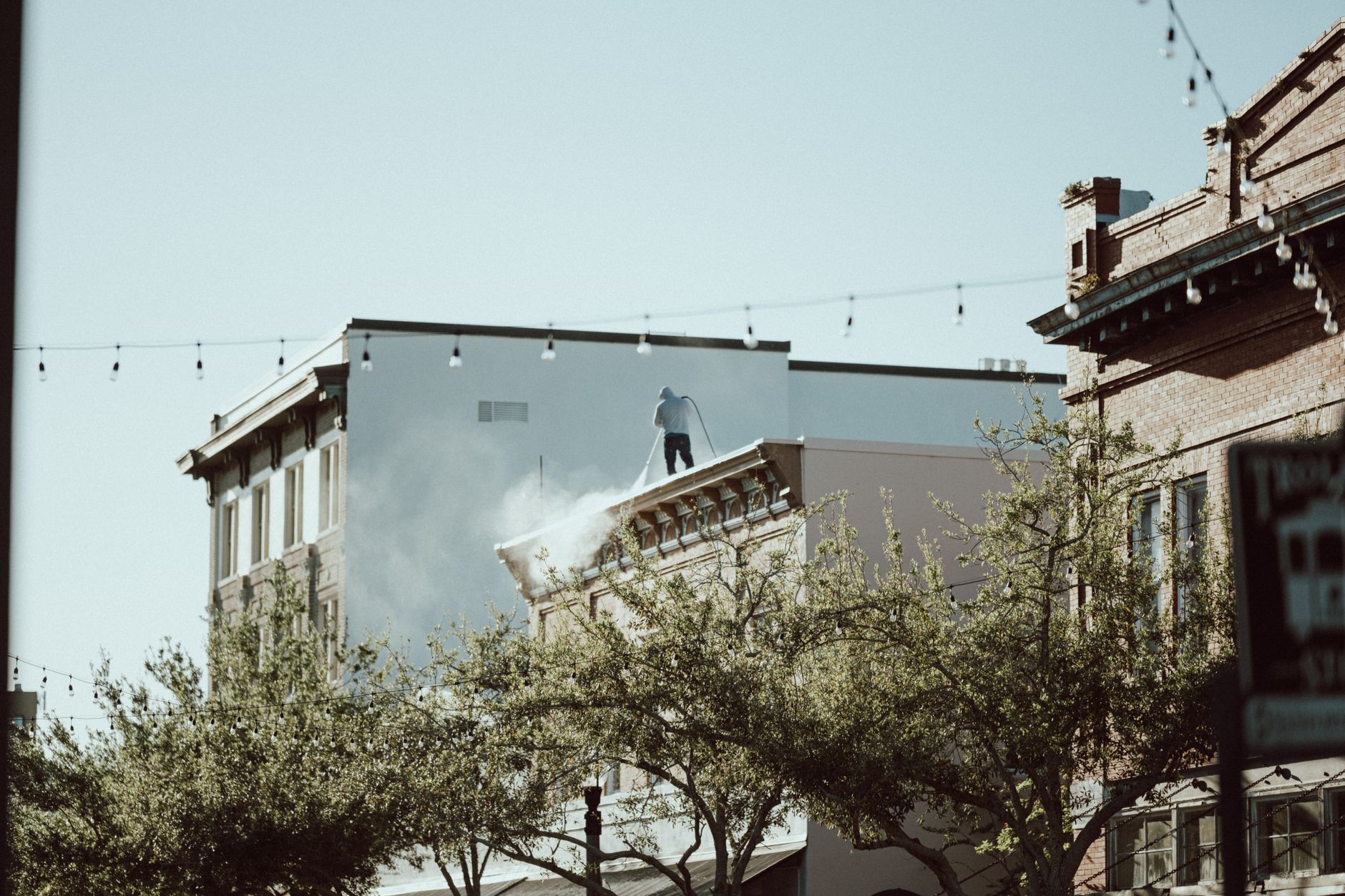
Foam Roofing Reddit: What Homeowners Actually Say (Plus Arizona Facts)
Searching "foam roofing reddit" usually pulls up a mix of genuine success stories, horror stories about failed coatings, and a lot of unanswered questions about whether spray polyurethane foam (SPF) is worth the money. This article sorts through the common Reddit claims, checks them against verified sources, and layers in Arizona-specific context -- including UV index 11+, monsoon season from June 15 through September 30, and the flat-roof reality of most Phoenix East Valley homes. Read this before you call a contractor or take any single Reddit comment at face value.
What exactly is spray foam roofing, and why does it come up so much on Reddit?
Spray polyurethane foam roofing is a seamless, monolithic system applied as a liquid that expands into rigid closed-cell foam and is then coated with a UV-protective elastomeric topcoat. It comes up constantly on Reddit because it is one of the few roofing options specifically suited to flat and low-slope roofs, which are the dominant residential roof type across Phoenix and the East Valley.
SPF is not a DIY product. Two liquid components -- a polyol resin and an isocyanate -- are combined under heat and pressure at the spray gun tip. The chemistry is sensitive: temperature, humidity, substrate moisture, and mixing ratios all affect adhesion and cell structure. Reddit threads that describe catastrophic failures almost always involve either an unqualified applicator, a skipped primer coat, or an inadequate topcoat thickness.
The Arizona State Facilities Board publishes a Spray Applied Polyurethane Foam Roofing specification (07 57 13) that details minimum application standards for state-funded buildings. While residential projects are not legally bound by this spec, it is a useful benchmark for what a professional installation looks like and what questions to ask your contractor.
Is foam roofing actually good, or is Reddit just full of contractor shills?
Foam roofing is genuinely good for the right application -- specifically flat and low-slope roofs in hot, dry climates. The skepticism on Reddit is not unfounded, but most negative experiences trace back to poor installation or deferred maintenance on the protective coating, not a fundamental flaw in the material.
Closed-cell SPF has an R-value in the range of 6.0 to 7.0 per inch, making it one of the highest-performing insulation materials available for roofing. The InterNACHI polyurethane spray foam reference notes that closed-cell foam also acts as an air barrier and vapor retarder, which compounds its energy performance beyond the raw R-value number.
For Arizona homeowners, that matters. A roof surface in Phoenix can reach 160°F on a summer afternoon. A properly applied SPF system with a reflective elastomeric coating can reduce attic temperatures significantly, which reduces HVAC runtime. That is not contractor marketing -- it is physics. The IKO commercial roofing insulation guide confirms SPF as one of the highest R-value-per-inch options available for flat roof assemblies.
How much does foam roofing cost compared to other options?
Installed SPF roofing in the Phoenix metro typically runs between $4 and $7 per square foot for a standard residential flat roof, depending on foam thickness, topcoat system, and site conditions. That puts a 1,500-square-foot flat roof somewhere between $6,000 and $10,500 before any tearoff or deck repair.
For comparison, GAF's roof cost resource shows that conventional asphalt shingle replacement costs vary widely by region and material grade. Shingles are rarely appropriate for true flat roofs, so the comparison is usually foam versus TPO membrane versus built-up roofing (BUR) for East Valley homeowners.
A few cost factors Reddit threads often miss:
- Foam thickness matters. A 1-inch application gives you roughly R-6.5. A 2-inch application gives you R-13. Thicker foam costs more upfront but changes your energy math.
- Recoat cycles cost money too. The topcoat on an SPF roof typically needs to be refreshed every 5 to 10 years, depending on UV exposure and foot traffic. In Arizona, UV index regularly hits 11 or above, so plan for the shorter end of that range.
- You can often roof over existing substrate. Unlike a full tearoff, SPF frequently bonds directly to an existing substrate if it is dry and sound, which reduces labor cost and landfill fees.
If you want a ballpark for your specific square footage, the GAF roof cost calculator is a reasonable starting point, though it is weighted toward shingle roofing and should be treated as a floor, not a ceiling, for SPF pricing in Arizona.
Do you actually need a permit to install foam roofing in Arizona?
Yes, in most Arizona jurisdictions a foam roof installation or re-roof requires a permit. Skipping the permit is one of the most common mistakes Reddit threads describe, and it can create serious problems when you sell the home or file an insurance claim.
The City of Scottsdale publishes a citizen's guide to re-roofing that outlines when permits are required and what inspections are involved. Most Phoenix East Valley municipalities follow similar rules under the adopted Arizona building codes from the ICC.
Permit requirements exist for a reason. An inspector will verify that foam thickness meets minimum specs, that the topcoat is applied, and that drainage is adequate. Those checks protect you. A foam roof installed without a permit by a contractor who later disappears leaves you with no recourse and a potential problem at closing.
How do you find a legitimate foam roofing contractor and avoid the ones Reddit warns about?
Check Arizona ROC license status, verify BBB standing, and ask for proof of manufacturer certification before signing anything. Most foam roofing nightmares on Reddit share a common thread: the homeowner hired on price alone without verifying credentials.
The Arizona ROC minimum industry standards define what licensed roofing contractors are required to do. A licensed contractor is legally accountable; an unlicensed one is not. Verify any contractor's ROC license number at the ROC website before you sign a contract.
The BBB maintains directories of vetted roofing spray foam insulation contractors across Arizona, including listings near Phoenix and Tucson. BBB accreditation is not a guarantee of quality, but complaint history is public and searchable, which is more than you get from a Reddit username.
Questions to ask any SPF contractor before hiring:
- What is your Arizona ROC license number? (Verify it yourself.)
- Are you certified by the foam or coating manufacturer?
- What primer system do you use, and why?
- What is the minimum topcoat dry film thickness after cure?
- What does your warranty cover, and is it tied to the manufacturer or just you?
- Can you provide references in my zip code from the last 12 months?
What do Reddit users get right and wrong about foam roofing maintenance?
Reddit users are generally correct that foam roofing requires active maintenance -- specifically periodic recoating and prompt repair of any punctures or blistering. Where they often go wrong is assuming that any blistering or granulation means the roof has failed and must be torn off.
Surface blistering in an SPF roof usually means trapped moisture in the substrate at the time of application, or a pinhole in the topcoat that let water enter. Neither of those requires a full replacement if caught early. A small repair and a spot recoat are often all that is needed.
What does require attention every year in Arizona:
- Topcoat condition. Check for chalking, cracking, or areas where the foam is exposed. Exposed foam degrades rapidly under UV.
- Post-monsoon inspection. Arizona monsoon season runs June 15 through September 30. Wind-driven debris can puncture coatings. Inspect after any significant storm.
- Drain and scupper condition. Flat roofs pool water if drains clog. Standing water on foam is not an emergency the way it is on wood decking, but it does stress the coating over time.
You do not need a new roof if your topcoat is chalking but structurally intact. You need a recoat. A contractor who tells you otherwise on a roof that is less than 10 years old deserves scrutiny.
Is foam roofing a good idea for Arizona specifically?
For flat and low-slope roofs in the Phoenix metro and East Valley, foam roofing is one of the strongest choices available -- not because it is trendy, but because it handles heat, provides seamless waterproofing, and bonds well to common Arizona substrate materials like concrete block parapets and existing built-up roofing.
Arizona's climate puts every roofing material under stress that most of the country never sees. UV index 11 or higher for months at a time degrades organic materials quickly. Asphalt shingles that last 25 years in Minnesota may last 15 to 20 years in Phoenix under the same conditions. Tile lasts 30 to 50 years but is not appropriate for flat roofs. SPF with a quality elastomeric topcoat, properly maintained, can last 20 to 30 years with recoat cycles.
The foam system's seamless nature is particularly valuable during monsoon season. A conventional membrane with seams and laps has multiple potential failure points. Foam has none, assuming proper original application.
Internal Resources
- Learn about flat roof repair options for East Valley homes before committing to a full replacement.
- Compare SPF roofing versus TPO membrane systems side by side.
- Read our guide to hiring a roofing contractor in Arizona without getting burned.
- See monsoon roof prep tips for Phoenix homeowners before June 15.
Frequently Asked Questions
Does foam roofing work in monsoon rain?
Yes, when properly applied and coated. SPF is seamless and waterproof. The risk during monsoon season is wind-driven debris puncturing the topcoat, not rain penetration through the foam itself. Inspect the coating after major storms.
How long does a foam roof last in Arizona?
A well-applied SPF roof with a quality elastomeric topcoat typically lasts 20 to 30 years with proper recoat cycles. Expect to recoat every 5 to 10 years depending on topcoat thickness and UV exposure. Arizona's UV index 11+ environment pushes you toward the shorter recoat interval.
Can foam roofing be walked on?
Yes, with care. Closed-cell foam is rigid and can support normal foot traffic for inspection and HVAC service. Avoid dragging equipment, concentrated point loads, or sharp tools directly on the surface. If you have regular rooftop foot traffic, ask your contractor about a heavier topcoat or granulated finish.
Do I need to tear off my old roof before applying foam?
Not always. SPF bonds well to many existing substrates including built-up roofing, concrete, and wood decking -- provided the substrate is dry, structurally sound, and properly primed. A moisture scan before application is standard practice and protects both you and the contractor.
Is foam roofing covered by homeowners insurance in Arizona?
Coverage depends on your policy and carrier, not the roofing material itself. SPF roofing is an accepted system and should not trigger exclusions. However, if your foam roof was installed without a permit, some carriers may deny claims related to the roof. Pull the permit.
Why do some Reddit users have bad experiences with foam roofing?
The most common causes are unlicensed or uncertified applicators, inadequate substrate preparation, insufficient topcoat thickness, and deferred maintenance. The material itself is not the problem in most documented failures. Verifying ROC license status, checking the Arizona ROC workmanship standards, and asking for manufacturer certification before hiring eliminates the majority of these risks.
*Related reading on RoofInstall.net:*
Know your number before you call a roofer.
Free Roof Cost Estimate